If you look at the charts today, it’s all hyper-pop, trap beats, and 15-second TikTok loops. But there was a time—specifically between 1970 and 1979—when the vinyl era reigned supreme, and a single song could hold the entire world captive for eight minutes straight. We’re talking about the era of 70s rock hits, a decade that took the psychedelic leftovers of the 60s and forged them into something heavier, softer, and infinitely more enduring.
The transition from the 1960s to the 1970s wasn't just a calendar flip; it was a vibe shift. The "Summer of Love" idealism had curdled, replaced by the gritty reality of the Vietnam War and a looming economic recession. Rock music responded by splitting into a dozen different directions: the raw power of hard rock, the glitter of glam rock, the intimacy of the singer-songwriter movement, and the calculated precision of art rock. Here is the deep dive into the hits that defined the decade, the data behind their dominance, and why they still hit just as hard in 2024.
1971: The Year 70s Rock Hits Became Immortal
If you ask any music historian to pinpoint the "Greatest Year in Music," 1971 is usually the answer. It was the year the Billboard Hot 100 felt less like a chart and more like a Grammy Hall of Fame induction ceremony. This was the year that gave us Led Zeppelin IV, Tapestry, and Hunky Dory. It was a moment when 1971 rock music achieved a perfect balance between commercial appeal and artistic experimentation.
The undisputed heavyweight champion of the year was Don McLean’s "American Pie." At eight and a half minutes long, it broke every rule of radio. Traditionally, stations wanted three-minute tracks to maximize ad revenue. McLean’s epic was so long it had to be split across the A-side and B-side of the 7-inch vinyl. Yet, it spent four weeks at #1. The wild part? It’s a song about the 1959 plane crash that killed Buddy Holly, Ritchie Valens, and the Big Bopper—events that happened when McLean was just 13. Today, "American Pie" has over 600 million streams on Spotify, proving that nostalgic 70s songs have a digital shelf life that modern hits can only dream of.
What are the most iconic rock hits from 1971?
- "American Pie" (Don McLean): A cultural phenomenon that topped the Billboard Hot 100 for four weeks despite its record-breaking length.
- "Imagine" (John Lennon): A multi-platinum anthem for peace that remains one of the most covered songs in history.
- "Maggie May" (Rod Stewart): Originally a B-side, this track spent five weeks at #1 and launched Stewart’s solo career.
- "You’ve Got a Friend" (James Taylor): A definitive soft rock hit written by Carole King that earned Taylor a Grammy.
- "I Feel the Earth Move" (Carole King): A high-energy staple from Tapestry, one of the best-selling albums of all time.
The Transition: From Psychedelic Dreams to Stadium Reality
By 1973, the British Invasion legacy had evolved. The trippy, sitar-heavy sounds of the late 60s were out. In their place came stadium rock. Bands like Led Zeppelin and Pink Floyd weren't just playing clubs anymore; they were filling arenas with massive PA systems and light shows. This shift was fueled by the rise of FM radio. While AM radio stuck to the "Top 40" hits, FM radio allowed DJs to play longer, "deep cuts" and experimental tracks, giving birth to the Album Oriented Rock (AOR) format.
The economy also played a role. The 1973 oil crisis and a stagnating economy meant people wanted music that either offered total escapism or reflected their frustration. This is where hard rock pioneers like Black Sabbath and Deep Purple found their footing. The "analog warmth" of 70s recording techniques—think 2-inch tape and massive mixing consoles—gave these tracks a physical weight that digital production often struggles to replicate. Producers of the era focused on capturing the "room sound," which is why 70s rock guitar riffs sound like they’re vibrating in your chest rather than just playing in your ears.
Women in Rock: Beyond the Singer-Songwriter Box
When people talk about women in 70s rock, they usually start and end with Carole King. And look, her impact is undeniable. Tapestry was multi-platinum before that was even a common industry term, staying on the charts for over 300 weeks. Her partnership with James Taylor at The Troubadour in Los Angeles created the blueprint for the 70s singer-songwriter era. When Taylor released his version of King’s "You’ve Got a Friend" in 1971, it became his first #1 hit, cementing their status as the decade's royal duo.
But the real story of the 70s involves women breaking into the "boys' club" of hard rock and punk. While Carole King was perfecting the ballad, artists like Suzi Quatro were proving that a woman could lead a rock band with a bass guitar and a leather jacket. By 1975, Patti Smith was merging poetry with garage rock, and by 1977, The Runaways were bringing a raw, teen-angst energy to the scene that would later influence the 90s grunge movement. These women weren't just "female rockers"; they were architects of the sound.
Best 70s Rock Ballads: Why We Still Scream These at 2 AM
The 70s perfected the art of the power ballad. These weren't just slow songs; they were emotional odysseys. Take Queen’s "Somebody to Love" (1976). Freddie Mercury used multi-tracking to create a 100-voice gospel choir out of just three singers. It was art rock disguised as a pop hit. Then there’s The Rolling Stones with "Angie," a track that traded their usual swagger for raw, acoustic vulnerability.
The best 70s rock ballads often shared a common thread: they were deeply personal. Rod Stewart’s "Maggie May" wasn’t a generic love song; it was a semi-autobiographical tale about a relationship with an older woman. The irony? His label didn't even want to release it. They thought the A-side, "Reason to Believe," was the hit. Fans disagreed, flipped the record, and turned the B-side into a global #1. This "fan-first" discovery is something we see today on TikTok, where an obscure track suddenly goes viral, bypassing the traditional gatekeepers.
Ahead of Their Time: The 70s Experimental Revolution
While some bands were perfecting the stadium sound, others were trying to break the concept of "rock" entirely. David Bowie is the patron saint of this movement. His "Berlin Trilogy"—produced in collaboration with Brian Eno—pushed art rock into the future. Songs like "Sound and Vision" (1977) from the album Low used gated reverb on the drums and strange synthesizer loops that wouldn't become "mainstream" until the mid-80s.
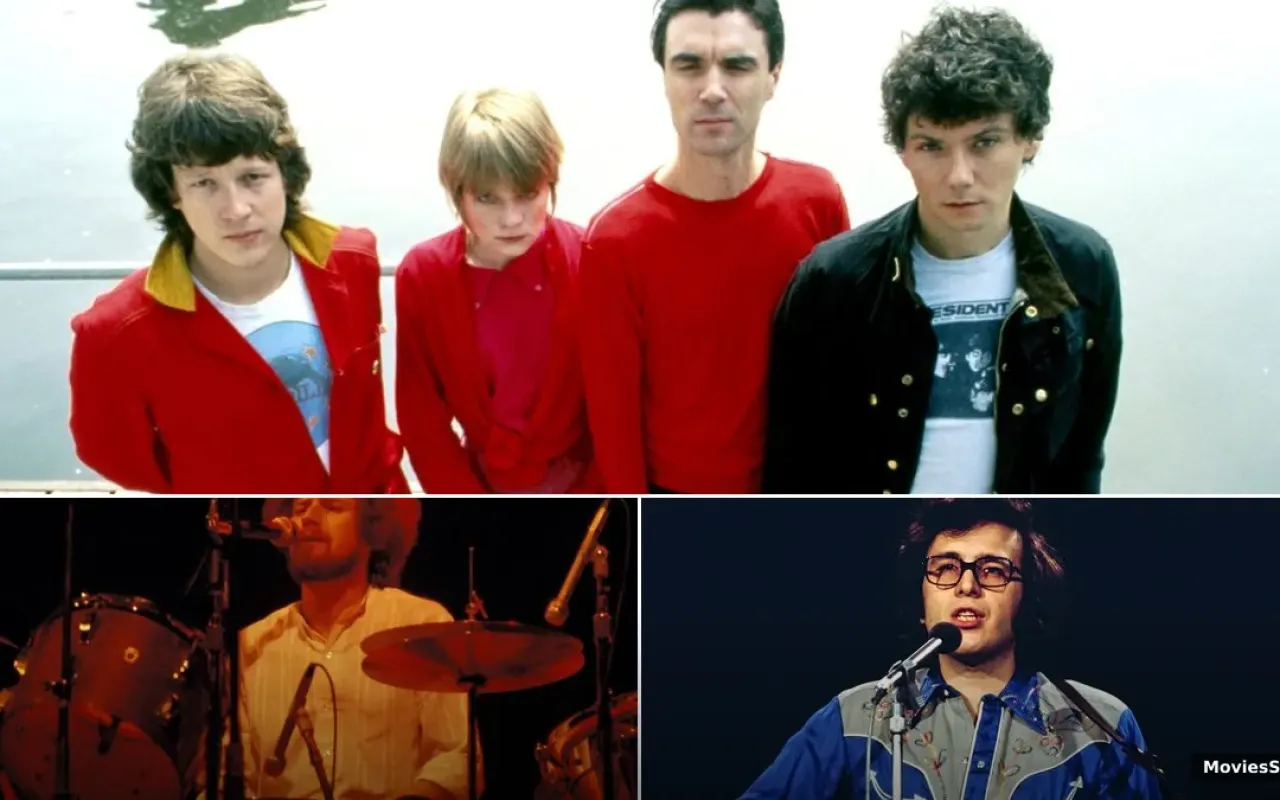
Then you have the Talking Heads. Their 1977 debut featured "Psycho Killer," a song that felt like it belonged to the new wave movement of 1982. It was twitchy, intellectual, and featured a bridge sung in French. It only reached #92 on the Billboard Hot 100 at the time, but its influence on indie rock and post-punk is immeasurable. These ahead of their time rock songs were the bridge between the guitar-heavy 70s and the synth-driven 80s. They proved that rock didn't have to be "bluesy" to be powerful.
The Tech That Changed the Sound
You can’t talk about 70s rock hits without talking about the gear. This was the decade where technology became an instrument.
- The Talk Box: Made famous by Peter Frampton on Frampton Comes Alive! (1976), this device allowed guitarists to "shape" their guitar sound with their mouth. It’s the reason "Show Me the Way" sounds like a robot is singing the solo.
- The Moog Synthesizer: Before the 70s, synths were room-sized monsters. The Minimoog made them portable, allowing bands like Pink Floyd to bring "On the Run" to the stage.
- Multi-track Recording: The jump from 8-track to 24-track recording allowed for the massive vocal stacks found in Queen and Fleetwood Mac songs.
Music critics like Lester Bangs often complained that this tech made rock "too polished," but for fans, it created a cinematic listening experience. When you listen to a multi-platinum hit from 1974, like Eric Clapton’s cover of Bob Marley’s "I Shot the Sheriff," you’re hearing the peak of vinyl era production. Clapton was actually hesitant to release the song, fearing he wouldn't do Marley justice, but the track became a massive success, eventually being inducted into the Grammy Hall of Fame.
70s Rock in 2024: The TikTok and Cinema Effect
If you think 70s rock hits are just for people who remember the Ford administration, look at the data. Movies like Guardians of the Galaxy have introduced a whole new generation to 1974 bangers like "Tell Me Something Good" by Rufus and Chaka Khan. Written by Stevie Wonder, that track is a masterclass in funk-rock fusion that still feels fresh because of its "stank-face" groove.
On TikTok, tracks like Fleetwood Mac’s "Dreams" or Steely Dan’s "Dirty Work" have become the soundtrack for millions of videos. There’s a sociological reason for this: Gen Z and Millennials are drawn to the perceived "authenticity" of the 70s. In a world of AI-generated art and Auto-Tune, the slight imperfections of a 1971 drum fill or the raw crackle in a singer's voice feel like a return to something real. We’re not just listening to underrated 70s rock gems for the music; we’re listening for the humanity.
Key Takeaways
- 1971 was the pinnacle: The year saw a rare convergence of critical acclaim and massive sales, led by Don McLean and Carole King.
- FM Radio changed everything: The shift from AM to FM allowed for longer, more experimental songs to become hits.
- Innovation was everywhere: From David Bowie’s glam rock to Brian Eno’s electronic experiments, the 70s was the most creative decade in rock history.
- Legacy is data-driven: 70s hits consistently outperform tracks from the 80s and 90s in modern streaming numbers and sync placements (movies/TV).
- The "Analog" Appeal: The specific recording techniques of the 1970s created a warm, "thick" sound that modern digital production still tries to emulate.
The Last Word: Why the 70s Won
The 1970s were messy, expensive, and loud. But that friction is exactly why the music lasted. These songs weren't written for algorithms; they were written for people sitting in wood-paneled basements, dropping a needle onto a spinning disc of black wax. Whether it’s the 8-minute mystery of "American Pie" or the new wave twitchiness of the Talking Heads, 70s rock hits remain the gold standard. They are the "main characters" of the musical canon, and frankly, the rest of the decades are just living in their world.