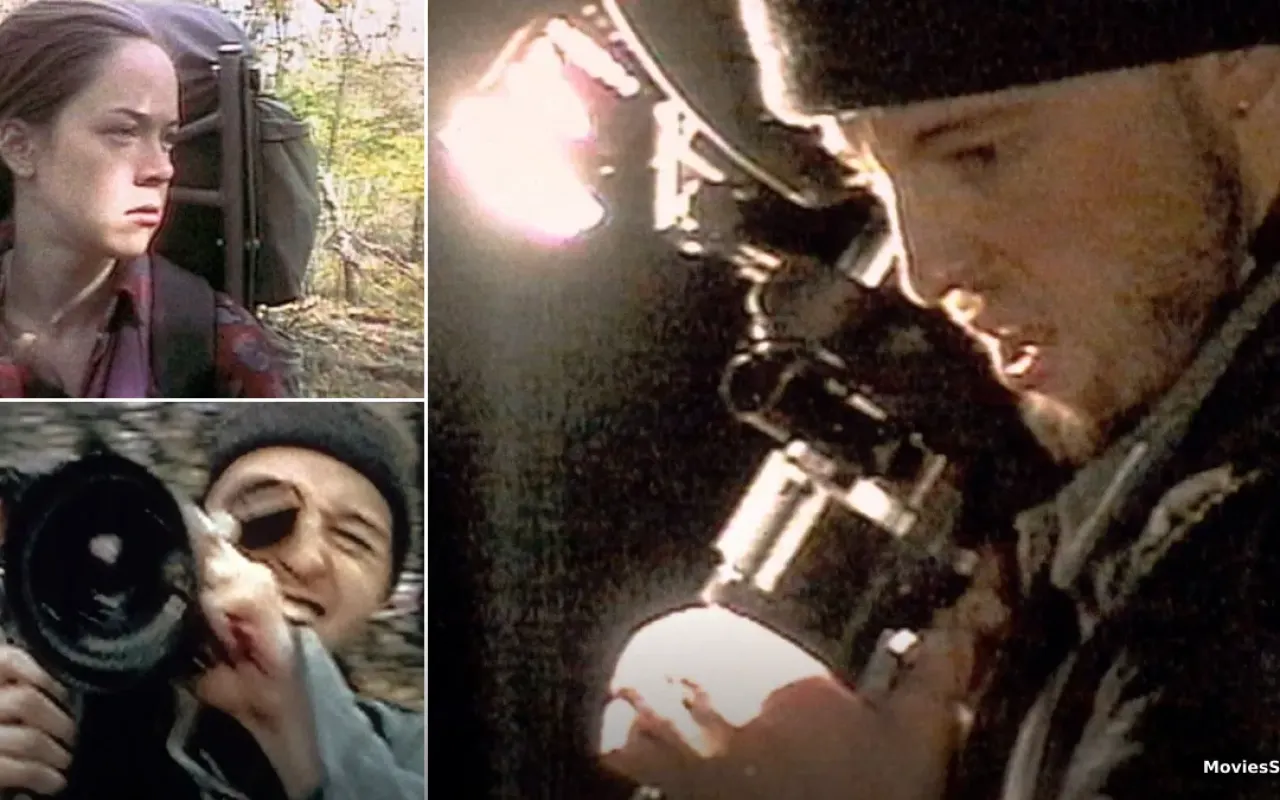
The woods of Burkittsville are growing dark once again, but this time, the architects of the original nightmare are finally being invited back into the fold. After twenty-five years of industry-altering success and internal friction, the Blair Witch Project reboot is moving forward with a surprising roster of talent. In a landmark move for the horror franchise, Lionsgate and Blumhouse have successfully brokered a "unity" deal that brings the original 1999 cast and creative team back as executive producers, signaling a new era for one of cinema’s most enduring legends.
Who is involved in the Blair Witch Project reboot?
The Blair Witch Project reboot features a collaborative team of franchise veterans and new horror visionaries:
- Executive Producers (Original Team): Directors Eduardo Sánchez and Daniel Myrick, producer Gregg Hale, and stars Joshua Leonard and Michael C. Williams.
- Director: Dylan Clark (Portrait of God).
- Producers: Jason Blum (Blumhouse) and James Wan (Atomic Monster).
- Screenplay: Originally by Chris Thomas Devlin, now being rewritten by Dylan Clark.
From Controversy to Collaboration: The 25-Year Dispute
The path to this Blair Witch Project reboot has been paved with decades of public tension. When The Blair Witch Project premiered at the Sundance Film Festival in 1999, it was a $35,000 indie experiment that transformed into a $248 million global phenomenon. However, the Blair Witch original cast—Joshua Leonard, Michael C. Williams, and Rei Hance (formerly Heather Donahue)—famously saw very little of that windfall.
The actors were initially paid roughly $1,000 for the eight-day shoot. As the film broke records, the "bonus" they received from Artisan Entertainment was famously a fruit basket. This lack of financial recognition, combined with the studio's continued use of their real names and likenesses for marketing, led to a long-standing likeness rights controversy. Earlier in 2024, following the announcement of the Blumhouse Blair Witch project at CinemaCon, Joshua Leonard Blair Witch star took to Instagram to voice his frustration, citing "25 years of disrespect" from those who pocketed the "lion's share" of the profits.
The new deal appears to be a corrective measure. By bringing the original creators on as executive producers, Lionsgate is not only securing their blessing but also tapping into the mythology that made the first film a found footage pioneer. While Rei Hance has largely retired from acting to focus on writing and advocacy, the involvement of Leonard and Williams suggests a significant shift in how studios handle SAG-AFTRA indie film contracts and legacy talent in the digital age.
Who is Dylan Clark? Analyzing the New Director’s Vision
The creative engine behind the Dylan Clark Blair Witch film is a director who understands the power of the "unseen." Clark rose to prominence through his viral short films, most notably Portrait of God. A Dylan Clark Portrait of God analysis reveals a filmmaker obsessed with ontological horror—the fear that something fundamentally wrong exists just outside our field of vision.
Unlike the chaotic, shaky-cam style often associated with the genre, Clark’s work utilizes precise found footage cinematography techniques, emphasizing stillness, lighting, and the psychological weight of the frame. He is currently rewriting the script originally drafted by Chris Thomas Devlin (Texas Chainsaw Massacre 2022). Industry insiders suggest Clark’s "new vision" will move away from the "slasher-in-the-woods" tropes of previous sequels and return to the cosmic, folk-horror roots of the original Burkittsville legend.
Expanding the Mythology: Beyond the Woods
One of the primary goals of the Blair Witch Project reboot is to synthesize a fractured timeline. The franchise has seen several attempts at expansion, including the 2000 sequel Book of Shadows and the 2016 Adam Wingard-directed Blair Witch. Neither managed to capture the cultural zeitgeist of the original, with Book of Shadows currently sitting at a dismal 14% on Rotten Tomatoes.
To succeed, the reboot must look toward the deeper lore established in peripheral media. The Blair Witch mythology has been quietly thriving in other formats:
- Video Games: The 2019 game by Bloober Team introduced psychological elements and the concept of "time loops" within the Black Hills Forest.
- Comics and Novels: Various entries have explored the 18th-century origins of Elly Kedward and the 1940s murders committed by Rustin Parr.
By involving Eduardo Sánchez and Daniel Myrick, the reboot has the opportunity to reconcile these disparate stories into a cohesive "cinematic universe" backed by James Wan’s Atomic Monster and Jason Blum’s Blumhouse.
What to Expect: Plot, Aesthetic, and Format
A central question remains: Will the Blair Witch Project reboot stick to the found footage format? While the 1999 original used 16mm and Hi8 cameras to create a raw, documentary feel, the 2016 sequel used modern 4K drones and ear-mounted cameras. Experts suggest that for the reboot to stand out, it may adopt a "hybrid" approach—blending traditional cinematography with diegetic footage to provide a more cinematic experience without losing the "realism" that defines the brand.
Regarding the budget, the 1999 film was produced for $35,000, while the 2016 version had a reported $5 million budget. The upcoming reboot is expected to fall in the $10 million to $15 million range, consistent with Blumhouse's "low budget, high concept" model. This allows for better visual effects while maintaining the "scrappy" indie spirit of the horror franchise.
"The goal isn't just to remake the movie; it's to reintroduce the terror of the unknown to a generation that has grown up with everything being searchable on a smartphone."
Key Takeaways for Horror Fans
- Official Involvement: For the first time since 1999, the original directors and key cast members are officially part of the production team.
- Creative Leadership: Dylan Clark is directing and rewriting the script, bringing a fresh perspective from his success in short-form horror.
- Strategic Partnership: The film is a co-production between Lionsgate, Blumhouse, and Atomic Monster.
- Legacy Respect: The "unity" deal addresses long-standing grievances regarding likeness rights and compensation for the original stars.
- Format Speculation: While not confirmed, the film is expected to evolve the found footage style for modern audiences.
Conclusion: A New Chapter for the Black Hills
The Blair Witch Project reboot represents more than just another entry in a tired franchise; it is a high-stakes attempt at brand redemption. By bringing the Blair Witch original cast and creators back to the table, Lionsgate and Blumhouse are signaling that they value the "DNA" of the property over a quick cash-in. Whether Dylan Clark can recapture the lightning-in-a-bottle terror of the 1999 original remains to be seen, but with the original architects finally on board, the project has its best chance yet of leading audiences back into the woods—and making them stay there.