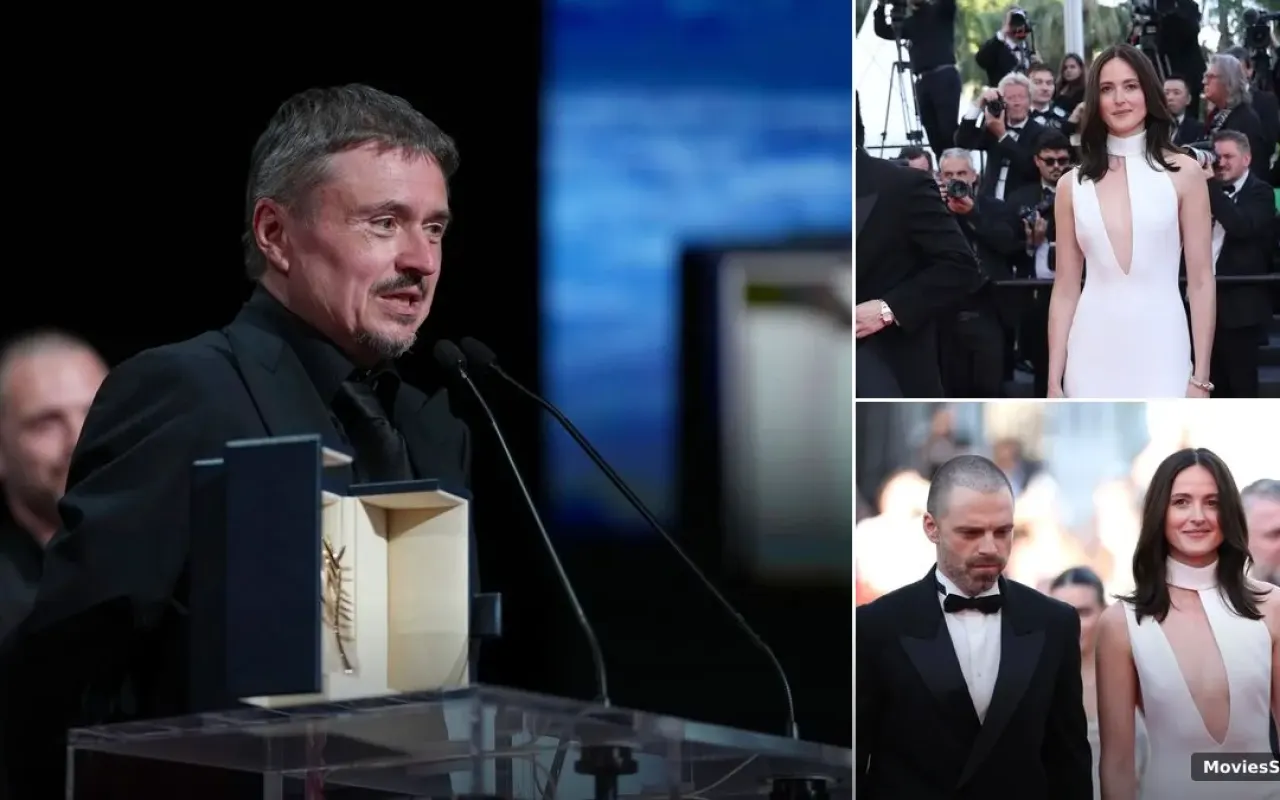
The vibe on the Croisette this year was electric, but the conclusion was almost destiny. As the 79th Cannes Film Festival wrapped its curtains, the Cannes 2026 winners list confirmed what many insiders had been whispering for weeks: we are living in the era of a cinematic dynasty. Cristian Mungiu’s Fjord didn’t just win the Palme d'Or; it solidified a record-breaking "seven-peat" for U.S. distributor Neon, a feat that has effectively reshaped the power dynamics of the indie film market.
Who won Cannes 2026? The Palme d'Or at the 2026 Cannes Film Festival was awarded to Fjord, directed by Cristian Mungiu and starring Sebastian Stan and Renate Reinsve. This marked Mungiu's second top prize and a record-breaking seventh consecutive win for U.S. distributor Neon, following a streak that began with Parasite in 2019.
The Big Winner: Why 'Fjord' Captured the Palme d'Or
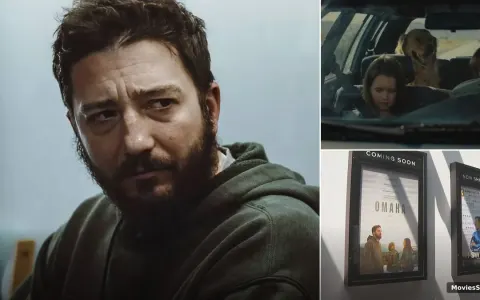
When Cristian Mungiu took the stage alongside Sebastian Stan and Renate Reinsve, it felt like a full-circle moment for the Romanian New Wave pioneer. Nineteen years after his harrowing abortion drama 4 Months, 3 Weeks and 2 Days traumatized and captivated the world, Mungiu returned with Fjord, his first venture into English and Norwegian-language filmmaking.
The film is a claustrophobic, high-stakes "culture war" drama that follows the Gheorghiu family—Mihai (Stan) and Lisbet (Reinsve)—as they relocate from Bucharest to a picturesque but socially rigid Norwegian village. The tension snaps when the Child Protective Services Norway (Barvneværnet) removes their five children following allegations of physical discipline. It’s a 146-minute descent into the friction between religious conservatism and the "ultra-liberal utopianism" of the West.
The Cristian Mungiu Fjord review consensus is clear: this is his most accessible work, yet it retains his signature "soul-scorching" intensity. While Mungiu famously utilized long, unbroken takes in his previous films like R.M.N., Fjord is more formally restrained. However, the standout technical achievement is a devastating 12-minute sequence shot where government officials enter the home to take the children—including a breastfeeding infant. It’s a scene that reportedly left the jury, headed by Park Chan-wook, in stunned silence.
Sebastian Stan Cannes 2026 buzz was already high, but his performance as Mihai is a career-best. Sporting a shaved head and delivering a rigorous, tri-lingual performance, Stan captures the "festering rage" of a father who feels his world is being dismantled by "good intentions." Reinsve, returning to the festival that made her a star with The Worst Person in the World, provides the film's emotional marrow as a mother caught between her heritage and her new home.
The Real Story Behind 'Fjord': The Bodnariu Case
While Fjord is a work of fiction, it is deeply rooted in the Bodnariu family case, a 2015 international scandal that saw the Barvneværnet seize five children from a Romanian-Norwegian family. The real-life case sparked global protests, with critics accusing the Norwegian state of "state-funded abduction" and religious persecution.
Mungiu’s narrative mirrors the Barvneværnet controversy movie beats almost exactly, but he adds a layer of moral ambiguity that the headlines lacked. In Fjord, the "culture clash" isn't just about religion; it’s about the language of discipline. A legal expert on Norwegian child welfare laws noted that the film accurately depicts the "best interests of the child" standard, which often clashes with Eastern European parental rights. The film’s "double-checking beliefs" theme forces the audience to wonder: is the state protecting the children, or is it erasing a family’s cultural identity?
Romanian cultural critics have praised Mungiu's transition to English, noting that the linguistic barrier—specifically the potential for "language-related miscommunication" during the investigation—is a central plot device that heightens the family's isolation. This isn't just a movie about a trial; it's a movie about the impossibility of true assimilation.
Neon's 'Seven-Peat': A Record-Breaking Run at Cannes
The real winner of the night, arguably, was Neon. By securing the Fjord movie Palme d'Or, Tom Quinn’s outfit has achieved a Neon Cannes winning streak that will likely never be repeated. Since 2019, Neon has held the North American rights to every single Palme d'Or winner:
- 2019: Parasite
- 2021: Titane
- 2022: Triangle of Sadness
- 2023: Anatomy of a Fall
- 2024: Anora
- 2025: It Was Just an Accident
- 2026: Fjord
How do they do it? While competitors like Netflix and Mubi spent big on titles like The Black Ball and Coward, Neon’s strategy of pre-festival acquisitions on high-pedigree auteurs continues to pay off. They arrived at the 79th edition with six competition titles already in their pocket. This dominance has reshaped the market; streamers are now struggling to find a foothold in the "prestige theatrical" space that Neon has effectively monopolized.
Looking ahead, Fjord movie Oscar predictions are already surfacing. With Neon’s proven track record, Sebastian Stan is a frontrunner for a Best Actor nod, and Mungiu is a lock for the Best International Feature race—though, since the film is largely in English and Norwegian, its eligibility categories may shift depending on the Academy's final word on dialogue percentages.
Political Firestorm: The Cannes 2026 Closing Ceremony Highlights
While the awards themselves were the main event, the Cannes 2026 closing ceremony highlights were defined by a series of high-stakes political statements. The most jarring moment came from Andrey Zvyagintsev, whose film Minotaur took home the Grand Prix.
Zvyagintsev used his speech to directly address Vladimir Putin, calling for an end to the "senseless slaughter" in Ukraine. It was a rare, unscripted moment of raw defiance that stood in stark contrast to the festival's usually curated atmosphere. Minotaur itself is a chilling domestic thriller that serves as a thinly veiled allegory for contemporary Russia, following an executive forced to sacrifice his employees for the war effort.
The ceremony was also haunted by an "open letter" regarding Canal+. Over 4,000 signatories, including major international filmmakers, protested Vincent Bolloré’s expanding control over the network, which many fear is threatening the editorial independence of French cinema. Though the speeches inside the Grand Théâtre Lumière were mostly subdued, the tension regarding the future of French media funding was palpable in the room.
In a surprise addition, the festival introduced the 'Queer Palm Revelation' prize, which was awarded to Federico Luis for Para Los Contrincantes. This new honor aims to highlight emerging voices in LGBTQ+ cinema, adding a much-needed layer of modern recognition to the festival’s independent awards slate.
Cannes 2026: The Complete Winners List
The 2026 jury, led by Park Chan-wook, was notably divided this year, resulting in several shared prizes. Park joked that he didn't want to give the Palme to anyone because he’s never won it himself, but admitted he had "no other choice" once he saw Fjord. Here is the full breakdown of the major prizes:
Major Competition Prizes
- Palme d'Or: Fjord, dir. Cristian Mungiu
- Grand Prix: Minotaur, dir. Andrey Zvyagintsev
- Jury Prize: The Dreamed Adventure, dir. Valeska Grisebach
- Best Director (Tie): Javier Calvo & Javier Ambrossi (The Black Ball); Paweł Pawlikowski (Fatherland)
- Best Actress (Tie): Virginie Efira & Tao Okamoto (All of a Sudden)
- Best Actor (Tie): Emmanuel Macchia & Valentin Campagne (Coward)
- Best Screenplay: Emmanuel Marre, A Man of His Time
Special Awards and Independent Prizes
- Camera d'Or (Best First Film): Ben’Imana, dir. Clémentine Dusabejambo
- Short Film Palme d'Or: For the Opponents, dir. Federico Luis
- Honorary Palme d'Or: Barbra Streisand (accepted via video), Peter Jackson, and John Travolta
- Un Certain Regard Prize: Everytime, dir. Sandra Wollner
- Queer Palm Revelation: Federico Luis
The Best Director tie was particularly chaotic, with Calvo, Ambrossi, and Pawlikowski all taking the stage at once. Pawlikowski, who previously won for Cold War, joked that the "mise-en-scène" of the three of them sharing one trophy was a disaster. Presenter Xavier Dolan was heard off-mic hoping the festival had "spare trophies in the back."
Key Takeaways from Cannes 2026
- Cristian Mungiu enters the "two-timer" club, proving the Romanian New Wave still has massive global currency.
- Neon is officially the most powerful distributor in the prestige market, with seven straight Palme d'Or wins.
- Sebastian Stan has successfully transitioned from blockbuster "Winter Soldier" to a serious heavyweight in world cinema.
- The festival remains a hotbed for political activism, with Andrey Zvyagintsev leading the charge against the Russian government.
- The Camera d'Or win for Clémentine Dusabejambo marks a historic moment for Rwandan cinema on the world stage.
What’s Next for the Winners?
As the red carpets are rolled up, the focus shifts to the fall festivals and the 2027 awards season. Fjord is scheduled for a theatrical release in North America via Neon in late 2026, with UK and European release dates expected to follow in early 2027.
The Cannes 2026 fashion highlights may have dominated the TikTok feeds—shoutout to Barbra Streisand’s virtual tribute and Isabelle Huppert’s tireless presence—but the legacy of this year will be the films. Between the grief-laden post-war Germany of Fatherland and the trench-bound queer romance of Coward, the 2026 slate was one of the strongest in recent memory.
Whether Fjord can match the box office heights of Anatomy of a Fall or the cultural zeitgeist of Parasite remains to be seen. But one thing is certain: Mungiu has delivered a film that doesn't just ask questions—it demands you question your own "liberal sins" before judging your neighbor. In a year defined by division, that might be the most valuable prize of all.