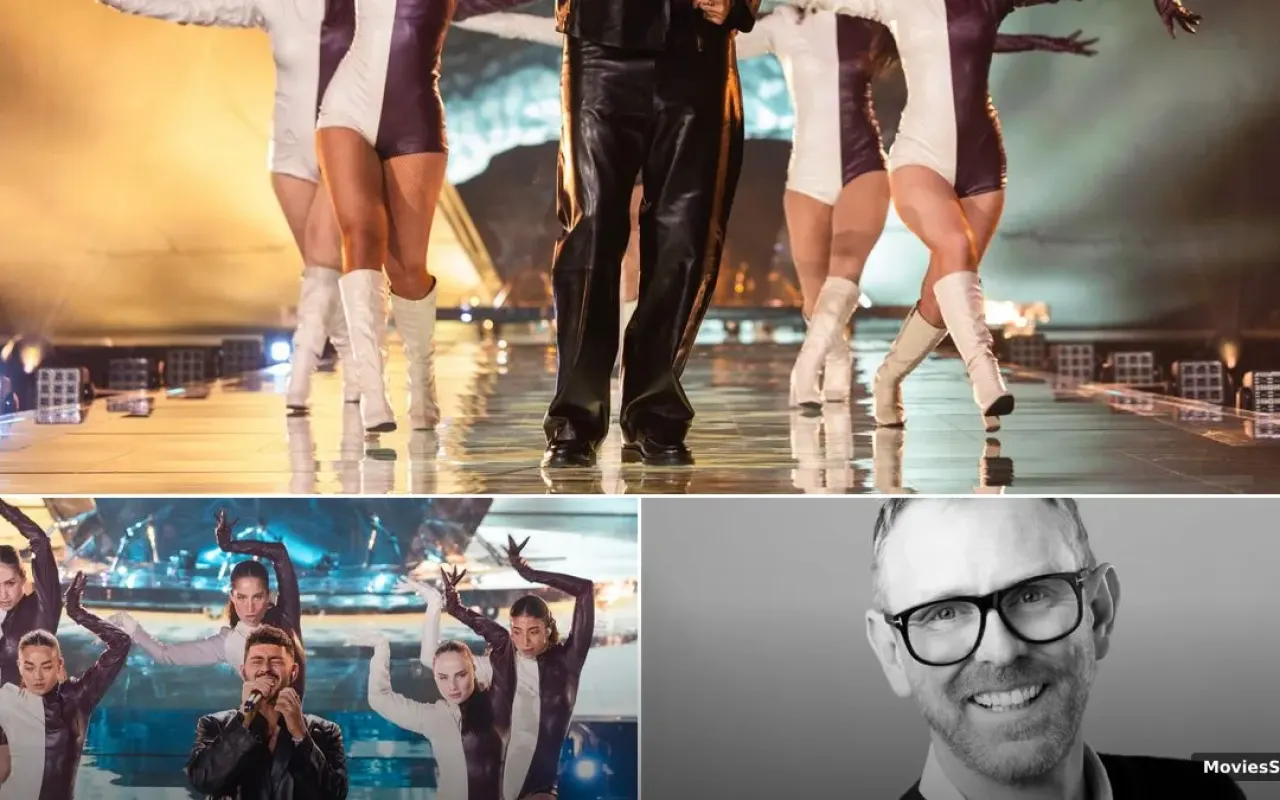
Just days before the 70th edition of the Eurovision Song Contest kicks off at the Wiener Stadthalle in Vienna, the competition has been rocked by a major regulatory intervention. On Friday, May 8, 2026, the European Broadcasting Union (EBU) issued a formal EBU warning KAN Eurovision 2026 following a series of targeted social media advertisements that the governing body deemed a violation of the contest's strict new integrity rules. The controversy centers on the Israeli representative, Noam Bettan, and a highly coordinated campaign that directly challenged the EBU’s efforts to curb televote manipulation.
The 20-Minute Takedown: Noam Bettan’s 13-Language Campaign
The incident began on Friday evening when a series of promotional videos featuring Noam Bettan and his entry, "Michelle," appeared across platforms like X (formerly Twitter) and YouTube. These were not standard artist promotions; they were hyper-targeted "calls to action" produced in 13 different languages, including Azerbaijani, Dutch, English, French, German, Greek, Italian, Maltese, Portuguese, Spanish, Swedish, and Ukrainian.
The core of the violation was Bettan’s explicit instruction for viewers to "vote 10 times" for Israel during the first semi-final on May 12. This direct appeal to exhaust the maximum voting limit is a breach of the European Broadcasting Union Code of Conduct, which was updated recently to preserve the "spirit of the competition."
Executive Director Martin Green acted with unprecedented speed. Within 20 minutes of the videos going live, the EBU contacted the Israeli delegation, demanding the immediate removal of the content. While the national delegations complied and the videos were scrubbed from official channels, the damage to the contest's neutral image was already done, prompting Green to issue a formal reprimand to the Israeli broadcaster, KAN.
What are the new Eurovision 2026 voting rules?
To ensure the integrity of the 70th anniversary contest, the EBU implemented a series of Eurovision 2026 voting rules designed to prevent coordinated block voting and third-party interference. The four major changes for 2026 include:
- 10-Vote Limit: The maximum number of votes per payment method (phone, SMS, or app) has been reduced from 20 to 10.
- Return of 50/50 Jury Split: Professional juries have returned to the semi-finals for the first time since 2022 to balance the televote.
- Stricter Promotion Rules: A new clause forbids "disproportionate promotion" funded or supported by third parties or government agencies.
- Enhanced Technical Safeguards: New anti-fraud voting technology Eurovision protocols have been introduced to detect and disqualify coordinated "bot" or "click-farm" activity.
Why the EBU Warning KAN Eurovision 2026 Signals a New Era of Enforcement
The Israel Eurovision formal warning is the first time the EBU has publicly enforced its new "Anti-Disproportionate Promotion" clause. This rule was specifically designed to prevent third-party funded campaigns from skewing the results—a major point of contention following the 2025 contest in Basel. During that year, the IGAA (Israeli Government Advertising Agency) was heavily involved in a massive social media spend that helped propel the Israeli entry to the top of the televote, despite lower jury scores.
While KAN maintains that Noam Bettan’s "Michelle" campaign was the "artist's own initiative" and lacked "illegal financing," the EBU’s stance is that any direct instruction to maximize votes on a single entry constitutes an attempt to unduly influence the outcome. Industry experts estimate that a 13-language targeted social media campaign of this scale would typically require an ad spend exceeding €50,000, raising questions about where the "artist's management" ends and institutional support begins.
Comparing the 2025 vs. 2026 Voting Framework
The shift in power between 2025 and 2026 is significant. The following table highlights how the EBU has attempted to dilute the impact of coordinated voting blocs:
| Feature | 2025 (Basel) | 2026 (Vienna) |
|---|---|---|
| Max Votes per Method | 20 Votes | 10 Votes |
| Semi-Final Voting | 100% Televote | 50% Jury / 50% Televote |
| Number of Jurors | 5 per country | 7 per country |
| Jury Age Diversity | No specific requirement | Min. 2 jurors aged 18-25 |
| Promotion Limits | Vague "fair play" guidelines | Specific "Disproportionate Promotion" ban |
Topical Analysis: The Strategy Behind the 13 Languages
The choice of languages in the Noam Bettan Michelle controversy reveals a calculated demographic strategy. By targeting languages like Spanish, Dutch, and Swedish, the campaign focused on countries where Israel has historically struggled to gain jury support but has seen high televote engagement. For example, targeting the Swedish-speaking audience in the lead-up to the semi-final at the Wiener Stadthalle suggests an attempt to bypass traditional block voting patterns in the Nordics.
Furthermore, the inclusion of Azerbaijani and Ukrainian targets suggests a focus on nations where political alignment often translates into high televote points. This "micro-targeting" is precisely what Martin Green Eurovision CEO statement aimed to address when he noted that the contest "must not be instrumentalised" for political or nationalistic agendas.
The Political Backdrop: Boycotts and RTVE’s Stance
The EBU warning KAN Eurovision 2026 does not exist in a vacuum. The 2026 contest is facing its highest withdrawal rate in years, with Spain, Ireland, the Netherlands, Iceland, and Slovenia all refusing to participate. The Spanish broadcaster, RTVE, was particularly vocal, with Chair José Pablo López stating that the "current events and genocide" made participation impossible.
Critics of the EBU point to the 2022 ban on Russia as a precedent, arguing that the organization’s "apolitical" stance is inconsistently applied. However, the EBU has consistently cited the fact that KAN remains an independent public broadcaster, unlike the state-controlled Russian media. The presence of major sponsors like Moroccanoil, an Israeli-founded brand, further complicates the narrative for fans who are currently leading a widespread boycott of the Vienna event.
Future Implications: Will KAN Face Further Sanctions?
A formal warning is often the final step before Code of Conduct sanctions are applied. If KAN or Noam Bettan’s team are found to be engaging in similar activities during the live broadcast week, the EBU has the power to disqualify the entry or nullify the televote from specific regions.
There is also the question of the Eurovision 10 vote limit enforcement. The EBU has confirmed it will work with its voting partner to audit the televote for Semi-Final 1 specifically for "suspicious patterns." This means that even if the votes are cast, they may be discarded if they are linked to coordinated credit card transactions or known VPN clusters.
Key Takeaways from the 2026 Voting Scandal
- Swift Intervention: The EBU removed the non-compliant videos within 20 minutes, showing a zero-tolerance policy for 2026.
- Spirit of the Rules: Even without "illegal funding," the act of telling fans to "vote 10 times" is now a punishable offense.
- Jury Power: The return of the 50/50 split in semi-finals is the EBU’s primary tool to neutralize televote manipulation.
- Transparency: The increase from 5 to 7 jurors, including youth representatives, aims to make the "professional jury" more representative and less prone to bias.
As the rehearsals continue in Vienna, the spotlight remains firmly on the integrity of the Eurovision Song Contest. Whether these new rules will succeed in keeping the focus on "music, creativity, and connection" or if the EBU warning KAN Eurovision 2026 is just the first of many controversies remains to be seen. One thing is certain: the era of the "unregulated televote" is officially over.