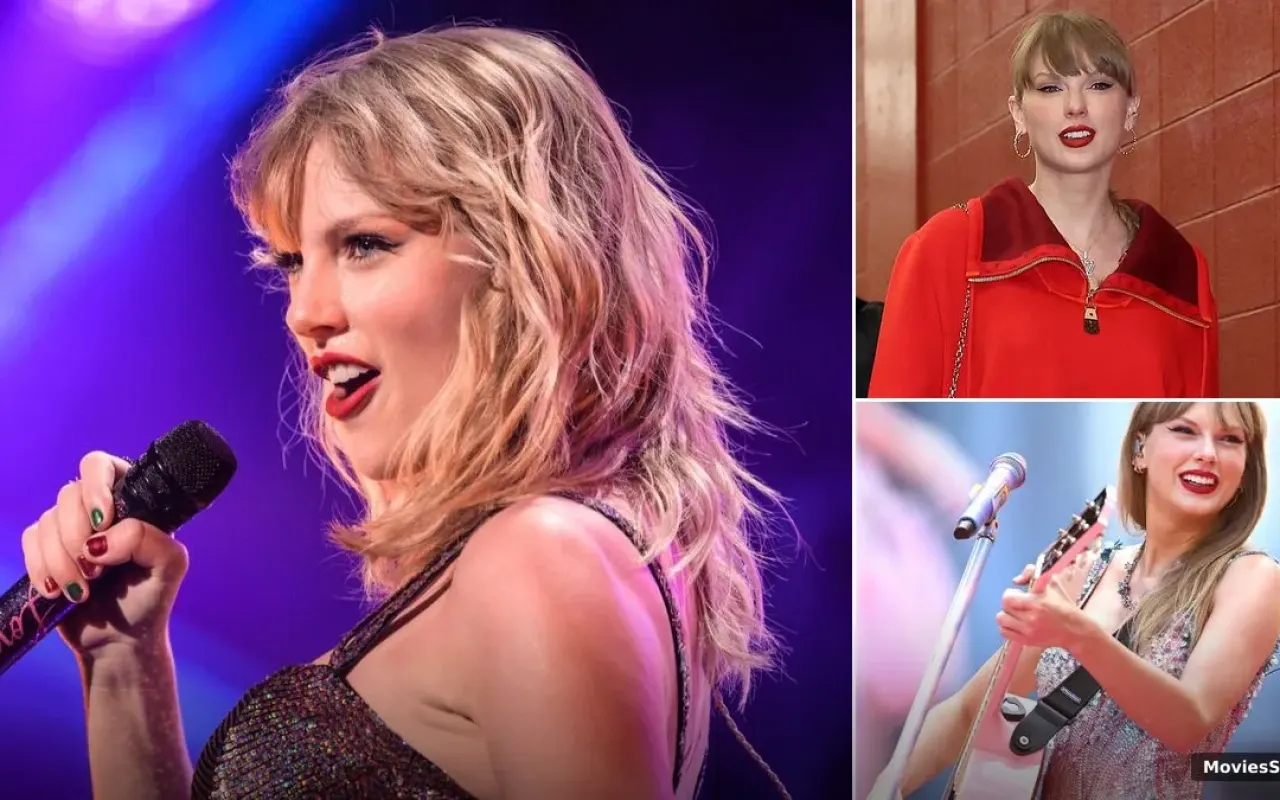
In May 2026, as Taylor Swift prepares for her induction into the Songwriters Hall of Fame, the music industry is witnessing a revolutionary shift in how human identity is protected. Beyond her record-breaking discography, Swift is now leading a legal vanguard to secure the Taylor Swift AI trademark, a move designed to fortify her voice and likeness against the rising tide of generative AI. This strategy marks a pivotal transition in intellectual property law: moving from the protection of creative works to the protection of the human persona itself.
How is Taylor Swift protecting her voice from AI?
Taylor Swift is utilizing trademark law to protect her voice and likeness from AI misuse. Her company, TAS Rights Management, filed applications for sound marks including phrases like "Hey, it's Taylor" and visual marks from her Eras Tour. This strategy aims to create a legal perimeter around her identity, allowing her to sue for trademark infringement when AI imitations cause consumer confusion.
The Identity Shift: Why Trademarks are Replacing Copyright
For decades, copyright law was the primary weapon for artists. However, the emergence of sophisticated voice cloning and AI-generated audiovisuals has exposed significant gaps. Copyright protects a specific recording or a specific image, but it struggles to protect the "vibe," the "timbre," or the "essence" of a celebrity that AI can now replicate without technically "copying" a protected file.
The Taylor Swift AI trademark strategy follows a trail blazed by actor Matthew McConaughey. Earlier in 2025, the Matthew McConaughey USPTO filings successfully secured registrations for his image, his voice, and his iconic catchphrase, "Alright, Alright, Alright." McConaughey’s legal team argued that in an era of unauthorized commercial exploitation, celebrities need a "clear perimeter" where consent and attribution are the baseline. By trademarking a voice, an artist moves the battleground from copyright (which has fair use exceptions) to the Lanham Act, which focuses on consumer confusion and false endorsement.
This shift is essential because generative AI models like those from OpenAI or ElevenLabs can create "new" content that sounds exactly like Swift but doesn't use a single sample of her actual music. Under current federal law, if no "work" is copied, copyright may not apply. Trademark law, however, triggers when a "mark"—in this case, a voice—is used in commerce to trick a consumer into thinking a celebrity endorsed a product or service.
Inside the TAS Rights Management Filings: Classes 9, 35, 41, and 45
Swift’s primary vehicle for these protections is TAS Rights Management. The company has filed several experimental applications with the USPTO that go far beyond standard brand names. These filings typically target four critical classes of goods and services, each requiring specific filing fees (often ranging from $250 to $350 per class):
- Class 9: Covers digital recordings, downloadable media, and digital replica rights for use in virtual environments.
- Class 35: Focuses on advertising and retail services, preventing AI from using her "brand" to sell third-party products.
- Class 41: Covers entertainment services, specifically protecting against unauthorized AI-generated concerts or "virtual" performances.
- Class 45: Includes licensing of intellectual property and legal services, establishing the framework for how her identity can be legally used.
One of the most notable filings is a sound mark for the phrase "Hey, it's Taylor." While the success rate of sound mark applications at the USPTO has historically been low—often due to the difficulty of proving "acquired distinctiveness"—Swift’s global ubiquity makes her a unique candidate. Her legal team is also pursuing visual trademarks for specific "motion marks," such as her silhouette in the multicolored bodysuit and pink guitar from the Eras Tour, creating a voice and likeness trademark shield that is virtually unprecedented in its scope.
The 'Showgirl' Conflict: Swift vs. Maren Wade
The urgency of these filings was highlighted by the recent controversy surrounding Swift’s latest project, The Life of a Showgirl. While critics and fans initially debated if the album’s aesthetic was "AI slop," the real battle moved to the courtroom. A preliminary denial of the trademark for the title occurred after Maren Wade, a Las Vegas performer, filed an infringement lawsuit claiming the title overlapped with her own established brand.
Swift’s lawyers have countered with a "Legendary Attention to Detail" defense, asserting that every element of the Showgirl project was meticulously crafted by human hands. This conflict underscores a growing risk for small business owners: as celebrities trademark broader aspects of their "vibe" or "persona," everyday entrepreneurs may find themselves accidentally infringing on a "voice" or "style" that has been legally cordoned off by a global superstar.
Trademark vs. Right of Publicity: Which is Stronger?
To understand the Taylor Swift AI trademark strategy, one must distinguish between the Right of Publicity and Federal Trademark Law (The Lanham Act).
The Right of Publicity is a state-level protection. In states like Tennessee or California, it is illegal to use a person’s name, voice, or likeness for commercial purposes without permission. However, because it is state-based, the protections are a patchwork. A deepfake created in a state with weak publicity rights might be harder to litigate.
The Lanham Act, specifically Section 43(a), provides a federal weapon. It prohibits any symbol or term that causes confusion regarding the "affiliation, connection, or approval" of goods. Trademarks are arguably stronger because:
- Duration: Trademarks can last forever as long as they are in use, whereas copyrights eventually expire.
- Remedies: Federal trademark infringement can lead to the destruction of infringing materials, treble damages, and the recovery of the defendant's profits.
- Digital Replicas: It provides a clearer path to stop voice cloning in commercial advertisements, as the voice itself becomes the "source identifier" for the Taylor Swift brand.
The 'Take It Down Act 2025' and Technical Limitations
While trademarks provide a commercial shield, they face technical limitations. A trademark can stop someone from selling an "AI Taylor Swift" perfume, but it struggles to stop the initial generative AI training process. AI developers often argue that using celebrity data to "train" a model is "fair use," much like a human singer might listen to Swift to learn how to sing.
This is where the Take It Down Act 2025 enters the civil litigation landscape. This new legislation provides a streamlined process for celebrities and private citizens alike to remove AI deepfakes from social media platforms. Unlike trademark law, which requires a commercial "use in commerce," the Take It Down Act focuses on the harm caused by the content itself, including non-commercial deepfakes and political misinformation.
For fan-made "AI covers" on platforms like TikTok and YouTube, the impact of Swift's trademarks is significant. While a parody may fall under fair use, the unauthorized commercial exploitation of a trademarked voice for a monetized video gives labels and artists a much faster "takedown" mechanism than traditional copyright claims, which are often tied up in "transformative use" debates.
Global Perspective: US Federal Law vs. The World
The Taylor Swift AI trademark is not just a domestic issue. As AI knows no borders, the WIPO (World Intellectual Property Organization) is currently debating new AI personality treaties. Other nations have already established more robust "Personality Rights" than the United States:
- India: The "Doctrine of Personality Rights" was recently upheld in the landmark Anil Kapoor case, where the court protected the actor's voice, likeness, and even his "jhakaas" catchphrase against AI misuse.
- New Zealand & Australia: These jurisdictions rely on "passing off" laws, which are similar to trademarks but don't always require a formal federal trademark registration.
- European Union: The AI Act is beginning to mandate that AI-generated audiovisuals be clearly labeled, complementing trademark protections with transparency requirements.
The Future of Identity: Blockchain and AI-Free Verification
As we move deeper into 2026, the industry is looking for technical solutions to supplement legal ones. Swift has already become one of the first artists to receive "AI-Free" verification on Spotify. This digital badge ensures listeners that the audio they are consuming is a "by-product of the human mind and not a machine."
Future-looking strategies include blockchain identity verification, where an artist's "official" voice is watermarked on the ledger. If a recording doesn't have the blockchain "handshake" of TAS Rights Management, it is automatically flagged as an unauthorized digital replica. We are also seeing the rise of AI identity theft insurance, a new product for performers that covers the legal fees associated with chasing down deepfakes globally.
Key Takeaways for the AI Era
- Identity as a Brand: Taylor Swift and Matthew McConaughey are leading a shift where a person's voice and appearance are treated as federal trademark assets rather than just biological traits.
- Commercial vs. Expressive Use: Trademarks are most effective against unauthorized commercial exploitation, while the Take It Down Act 2025 handles non-commercial harms.
- The Lanham Act Advantage: By using Section 43(a), artists can sue for consumer confusion, a broader and often more successful path than traditional copyright in the age of generative AI.
- Global Protection: While the US uses trademarks, countries like India use the "Doctrine of Personality Rights" to achieve similar protections for stars.
- Technical Shields: Spotify's "AI-Free" verification and blockchain tools are becoming the "digital watermark" that supports the legal trademark.
Conclusion: The Perpetual Persona
The battle over the Taylor Swift AI trademark is a bellwether for the future of human rights in a digital world. By leveraging TAS Rights Management filings and the Lanham Act, Swift is ensuring that her identity remains her own, even as technology makes it easier than ever to steal. As post-mortem publicity rights AI laws also begin to take shape, these 2026 trademark filings may ensure that a celebrity's voice remains protected long after they have left the stage. In the age of the algorithm, consent has become the ultimate currency, and the trademark is the vault that keeps it safe.