Real talk: the 2021 Mortal Kombat reboot was a vibe, but it felt like it was apologetic for being a video game movie. It gave us Cole Young, a "grounded" protagonist nobody asked for, and spent way too much time in a dusty training shed. But if the early numbers and the sheer audacity of this sequel are any indication, the Mortal Kombat 2 movie review cycle is about to be dominated by one sentiment: they actually listened. This isn't just a sequel; it’s a $80 million course correction that trades "grounded realism" for pure, unadulterated fan service and enough gore to make a medical student flinch.
With a $40 million to $50 million domestic opening weekend tracking across 3,400 North American theaters, the stakes are high. It’s currently neck-and-neck with The Devil Wears Prada 2 for the top spot, but let’s be honest—Miranda Priestly doesn’t have a Shao Kahn hammer. This film is a massive jump from the first movie’s $55 million budget, and it shows in every frame, from the neon-soaked realms of Edenia to the acid-filled Dead Pool. Director Simon McQuoid and writer Jeremy Slater have pivoted from the "Project Popcorn" era of streaming releases to a full-scale theatrical spectacle that feels like a love letter to the 16-bit era.
The Johnny Cage Era: How Karl Urban Steals the Show
The biggest question on everyone’s mind was whether Karl Urban Johnny Cage would actually work. Casting a 52-year-old actor as a character usually depicted as a thirty-something hotshot was a risk, but Urban plays into the "washed-up action star" energy perfectly. The film opens with a meta-masterpiece: a clip from Cage’s fictional movie Uncaged Fury. It’s a pitch-perfect parody of '90s JCVD-style action, complete with bad ADR and kicks that clearly don't land. It establishes Johnny not as a young upstart, but as a man desperate to reclaim his Hollywood glory.
Unlike Cole Young, who felt like he was being forced into the lore, Johnny Cage is the perfect audience surrogate. He’s skeptical, he’s hilarious, and he spends half the movie making the same jokes we’re making in the theater. His fighting style is a mix of Jackie Chan-inspired physical comedy and brutal MMA. While he doesn't have the traditional "mark" from the first film, the movie hints that his powers are ancient and Mediterranean in origin—a deep-cut nod to the games that explains his green energy without needing a magical birthmark. Urban’s charisma is turned up to 11, providing the "tongue-in-cheek" levity that was missing from the 2021 outing.
The Death of Cole Young: Why the Divisive Twist Works
If you were wondering how the sequel would handle the lukewarm reception to its original lead, the answer is "with a sledgehammer." Literally. In a move that is already trending across social media, the film makes a bold narrative choice regarding its former protagonist.
Does Cole Young die in Mortal Kombat 2?
Yes, Cole Young is killed in Mortal Kombat II. In a shocking twist designed to address fan feedback, the protagonist of the 2021 film is killed by Shao Kahn, who smashes his head with a hammer before his body is dissolved in the Dead Pool's acid.
The Cole Young death scene is a masterclass in subverting expectations. While some casual viewers might be shocked to see the "main character" exit so early, the hardcore fans—the ones who have been on the "hatewagon" since 2021—are treating it like a victory lap. By removing the OC (original character), the Jeremy Slater script clears the deck for the actual icons of the franchise. It’s petty, it’s violent, and it signals that this movie is for the people who know their Netherrealm from their Earthrealm. As for his family? They are largely ignored, a move that feels like a quiet admission that the "family drama" angle of the first film didn't land.
Ranking Every Fatality: From Kitana to Shao Kahn
You don't go to an R-rated video game movie for the plot; you go for the Mortal Kombat 2 fatalities. This film ramps up the gore to a level that makes the first movie look like a PG-rated cartoon. The choreography has been overhauled, moving away from "grounded" brawling toward the high-flying, magical martial arts seen in MK11 and MK1.
- The Fan Opener: Kitana (Adeline Rudolph) finally gets her due. Her use of the Kitana fan blades is elegant and terrifying, culminating in a kill that mirrors her "Royal Execution" fatality from the games.
- The Spike Slide: Sonya Blade (Jessica McNamee) utilizes the environment in a fight against Sindel, ending in a gruesome nod to "The Pit" stage where gravity does most of the work.
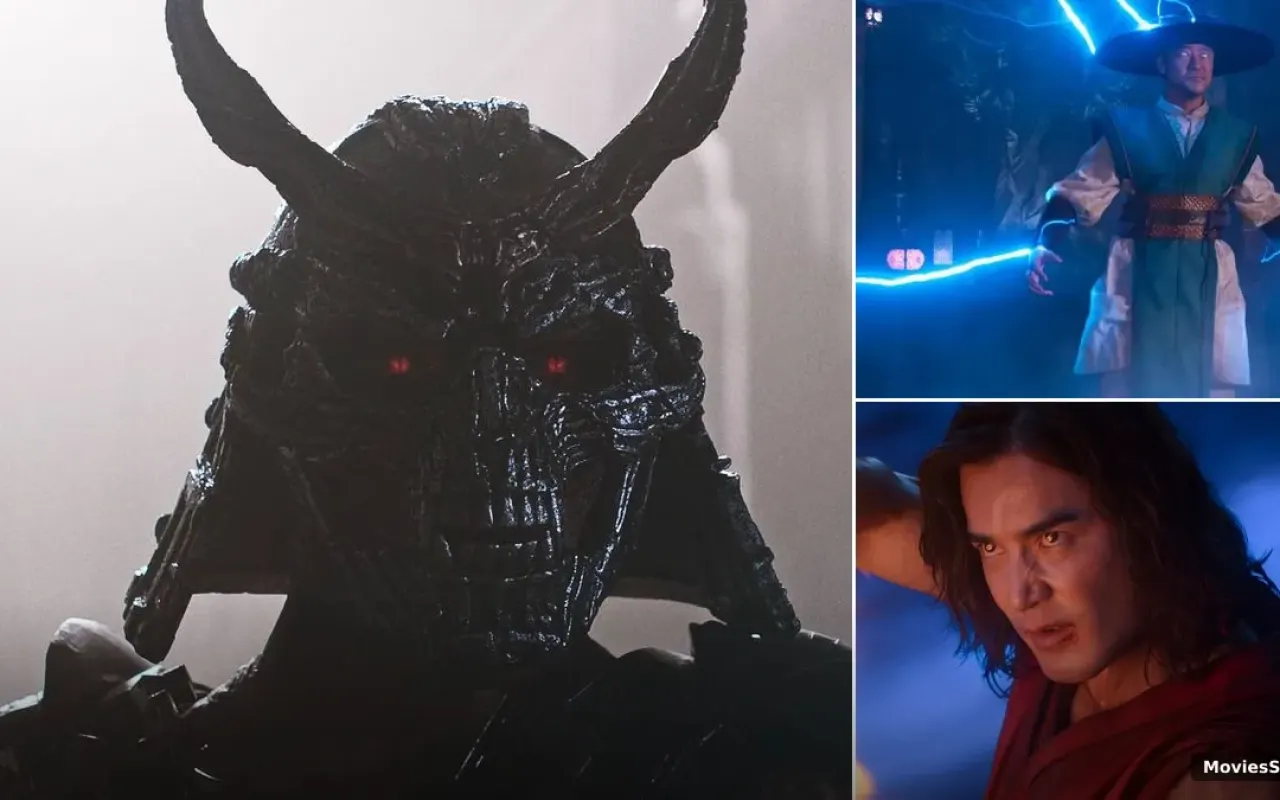
- The Razor Hat Revenant: In one of the film’s most emotional (and gross) fights, Liu Kang has to face a resurrected, corrupted Kung Lao. The use of the razor-rimmed hat in a close-quarters Netherrealm environment is a highlight of 3D stunt coordination.
- The Hammer Drop: Shao Kahn (Martyn Ford) proves why he’s the final boss. His kills aren't just violent; they're disrespectful. The sheer weight of the Shao Kahn hammer is felt in every scene, especially during the final showdown in the Outworld coliseum.
The technical execution here is superior to the 2021 film. While the first movie relied heavily on quick cuts, Mortal Kombat 2 uses wider shots to showcase the martial arts prowess of actors like Ludi Lin and Joe Taslim. Interestingly, the film's visual flair seems influenced by the Billie Eilish concert film releasing alongside it—specifically the use of James Cameron’s 3D camera technology to capture depth in high-speed motion, making the Liu Kang fire dragon sequences feel more immersive than ever.
Mortal Kombat 2 Ending Explained: Setting Up the Trilogy
The Mortal Kombat 2 ending explained isn't just a wrap-up; it’s a massive lore dump that sets the stage for a third film. The core of the finale revolves around necromancy and the return of fallen warriors. We see Quan Chi (Damon Herriman) using Shinnok's Amulet to harvest souls, which explains how characters like Kano and Sub-Zero are back despite their definitive deaths in the first movie.
The "necromancy" angle is crucial because it addresses the Noob Saibot theory. When Bi-Han (Sub-Zero) is resurrected, he isn't the same man. The film heavily teases his transformation into the shadow wraith, a fan-favorite development from the games. This also leaves the door open for Lewis Tan to return—not as Cole Young, but potentially as a soul-construct like Ermac or the blind swordsman Kenshi, though the movie leaves this as a "post-release fan theory" for now.
The film also spends time on the Kitana and Jade relationship, offering a perspective often missing from these hyper-masculine adaptations. There’s a distinct "female gaze" in how their friendship and eventual rivalry is portrayed—it’s about loyalty and the trauma of being "daughters" to a tyrant like Shao Kahn, rather than just being background fighters. This depth makes the eventual betrayal hit much harder than your average action beat.
The Business of Blood: Box Office and "Project Popcorn"
To understand why Mortal Kombat 2 feels so different, you have to look at the Mortal Kombat 2 box office context. The first film was a victim of Project Popcorn—Warner Bros.' 2021 experiment where they released their entire slate on HBO Max and in theaters simultaneously. While it only made $84 million globally, its streaming numbers were massive, proving there was an appetite for the IP.
With an $80 million budget, this sequel is a much bigger bet. The studio is targeting a 65% critic score and a 90% audience score on Rotten Tomatoes, aiming for that "cult classic" sweet spot. It’s a smart move. By leaning into the camp and the "R-rated video game movie" aesthetic, they’ve created something that feels more authentic than the first film's attempt to be The Dark Knight of fighting movies.
Mortal Kombat 2 vs 2021 Comparison
When comparing the two, the differences are night and day:
- Tone: 2021 was "grounded" and somber; 2022 is campy, colorful, and chaotic.
- Protagonist: Cole Young (OC) vs. Johnny Cage (Legacy character).
- Villain: A shadowy Shang Tsung vs. a front-and-center, physical Shao Kahn.
- Lore: The "Mark" system is downplayed in favor of traditional game magic and Edenian history.
Key Takeaways
- Johnny Cage is the MVP: Karl Urban’s performance saves the movie from taking itself too seriously.
- The Cole Young Twist: Killing the original lead is a bold move that successfully resets the franchise for hardcore fans.
- Lore Accuracy: From Shinnok's Amulet to the Dead Pool, the film is packed with Easter eggs for long-time players.
- Technical Upgrade: The fight choreography and 3D effects are a significant step up from the 2021 reboot.
- Future Outlook: The ending definitively sets up Mortal Kombat 3, with Quan Chi and the Netherrealm taking center stage.
The Verdict: Is It Better Than the First?
In every way that matters to a fan, yes. Mortal Kombat 2 is a loud, messy, and gloriously violent spectacle. It doesn't care about being "prestige cinema," and that’s its greatest strength. It embraces the fact that its source material is about a thunder god and a movie star fighting a four-armed monster for the fate of the universe.
While the pacing can feel rushed—often jumping from one fatality to the next without letting the emotional beats breathe—it’s exactly what the audience asked for. We didn't want a lecture on the "arcana" of the soul; we wanted to see Shao Kahn smash things and Johnny Cage throw shade. On those fronts, the movie delivers in spades. As we look toward the Mortal Kombat 2 streaming release date (likely 45-60 days after its May 8 theatrical debut), it’s clear that this franchise has finally found its footing. The "mortal" in Mortal Kombat finally feels like it has some weight again.