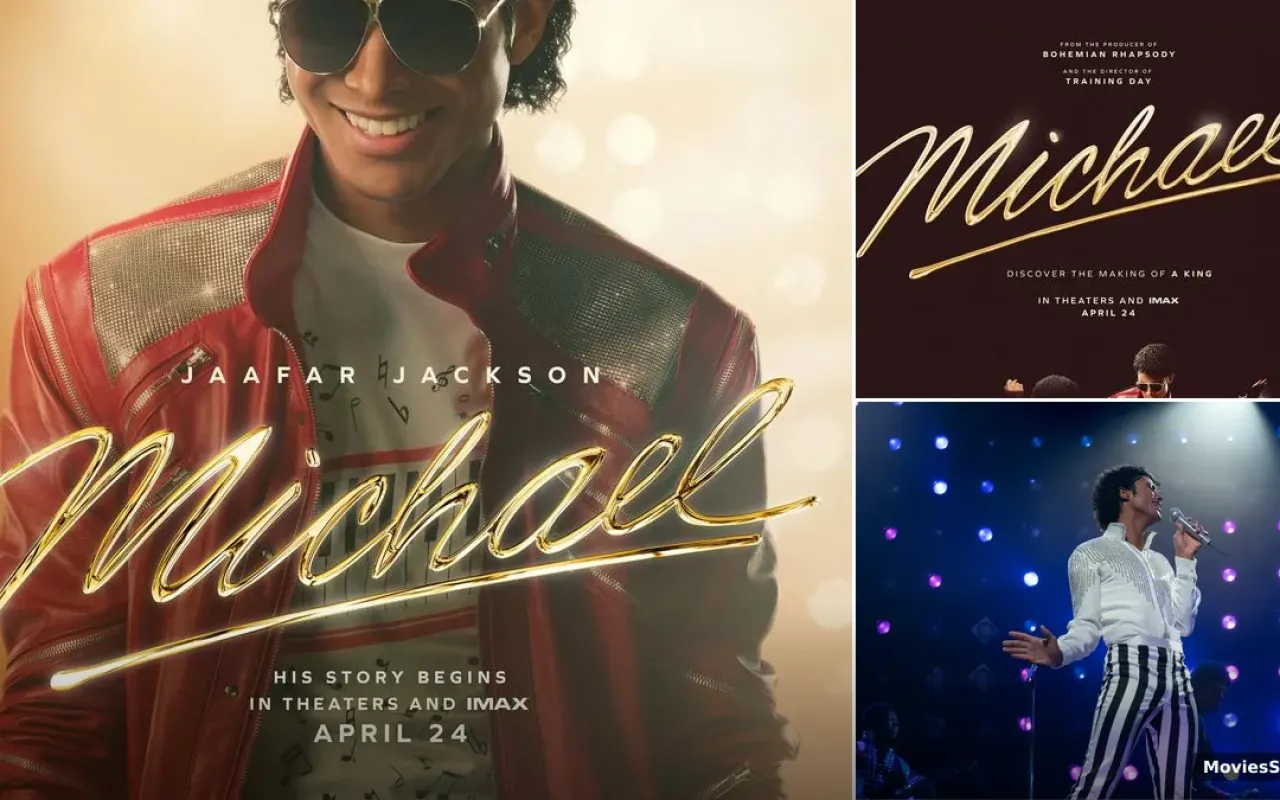
The global cinematic landscape has witnessed a seismic shift as the Michael movie box office collection surged past the $424 million mark in just ten days of release. Directed by Antoine Fuqua and produced by the veteran Graham King, the film has already outpaced the lifetime earnings of Baz Luhrmann’s Elvis, positioning itself as a formidable contender for the highest-grossing musical biopic of all time. Despite a stark divide between critical reception and audience adoration, the film’s commercial momentum suggests that the King of Pop’s legacy remains an unparalleled draw for international markets.
Global Box Office: Breaking Down the $500 Million Milestone
The financial trajectory of Michael has defied the "mediocre" early reviews that threatened its opening weekend. In its second weekend, the film maintained a strong presence, grossing over $50 million domestically. This brings its North American total to approximately $180 million, while its international performance continues to carry the heavy lifting. With a global box office milestone of nearly half a billion dollars reached in record time, the industry is closely watching to see if it can eclipse the $910 million benchmark set by Bohemian Rhapsody in 2018.
The film’s performance is particularly noteworthy given its stiff competition from other 2026 blockbusters like Crime 101 and the sequel The Devil Wears Prada 2. While the latter led its debut weekend with $80 million, the sustained audience word-of-mouth for Michael suggests a longer theatrical run. Investors and analysts at Lionsgate and Universal Pictures are reportedly optimistic, as the film’s $200 million production budget—one of the highest ever for a biographical drama—is already on the path to profitability.
Michael Movie Box Office Total: Comparative Analysis
To understand the scale of this success, one must look at how Michael compares to its predecessors in the musical biopic genre. The following table provides a snapshot of the current Michael movie global earnings relative to other major entries.
| Film Title | Domestic Total | International Total | Global Total |
|---|---|---|---|
| Michael (10-Day Mark) | $180M | $244M | $424M |
| Elvis (Final) | $151M | $132M | $283M |
| Bohemian Rhapsody (Final) | $216M | $694M | $910M |
This data confirms that Michael is tracking significantly ahead of Elvis and is currently the only film in the genre with a realistic shot at the $1 billion milestone. The heavy skew toward international markets highlights the universal appeal of Michael Jackson’s music, particularly in regions where his HIStory World Tour left a lasting cultural imprint.
Jaafar Jackson’s Performance: More Than Just an Imitation?
At the heart of the film’s success is the debut performance of Jaafar Jackson, the nephew of the late pop icon. Critics and fans alike have noted that Jaafar possesses a "DNA advantage" that transcends mere mimicry. His portrayal has been described not as an imitation, but as a total embodiment of his uncle’s spirit, rhythm, and soul. From the signature moonwalk to the soft-spoken off-stage demeanor, Jaafar has managed to capture the "electricity" that many previous dramatizations failed to replicate.
A significant point of discussion among technical analysts is the vocal doubling and dance choreography. While Jaafar performed many of the sequences himself, the production utilized a sophisticated blend of his natural singing voice and Michael’s original master tracks to ensure acoustic authenticity. This technical precision, overseen by the Michael Jackson Estate, has fueled significant awards season buzz, with many predicting an Academy Award nomination for the young actor.
The 'Sanitized' Narrative: What the Film Left Out
Despite its commercial triumph, Michael has faced intense screenplay criticism for what many call a "sanitized" portrayal of the star’s life. The film primarily covers the period from the Jackson 5 era in the 1960s to the peak of the Bad tour in 1988. By concluding the narrative at this apex, the film conveniently avoids the most harrowing legal battles of Jackson’s later years.
Investigative insights into the production reveal a specific 'Jordan Chandler clause' that reportedly shaped the final script. This legal restriction, combined with the creative control exercised by the MJ Estate and co-executors like John Branca, led to the removal of several references to the 1993 allegations. This has led to a massive disparity in ratings: a "Rotten" 39% from critics who sought a deeper dive into the "greys" of his life, versus a "Verified Hot" 97% from fans who preferred the celebratory, nostalgic tone.
Key elements that some critics felt were glossed over or omitted include:
- The full extent of the Pepsi commercial incident and its role in his subsequent dependency on painkillers.
- The nuanced perspectives of contemporaries like Sheryl Crow or Quincy Jones during the Thriller era.
- The detailed aftermath of the 1993 civil settlement and its impact on his global brand.
Portraying the Patriarch: Joe Jackson vs. Historical Accounts
One area where the film does not pull punches is the portrayal of the family patriarch, Joe Jackson. Played with a "menacing elegance" by Colman Domingo, the film depicts the physical and verbal cruelty Michael endured as a child. The narrative positions Joe as the primary antagonist, a man who "beat his children into excellence."
However, MJ historians point out a complex dichotomy. While the film shows the brutal belt strikes and the paralyzing fear Joe instilled, it also touches upon the family’s later defense of him. This tension between the trauma of the past and the loyalty of the present provides the film’s most grounded emotional stakes. The performance of Juliano Krue Valdi as young Michael further amplifies this, showcasing the wounded child staring out at the snow in Gary, Indiana, longing for a normalcy he would never know.
Regional Spotlight: Why Michael is Smashing Records in Nigeria and India
The Michael movie box office collection has seen an unprecedented surge in international markets, specifically in Nigeria, India, and the Philippines. In Nigeria, despite a distribution conflict between Nile Entertainment and Filmhouse Cinemas, the film has broken records for the highest-grossing musical biopic in West African history. This is attributed to Jackson's enduring status as a symbol of Black excellence and global stardom.
In India and the Philippines, the film has tapped into a deep well of nostalgia. Michael Jackson’s 1996 "Thriller in Manila" and his massive influence on Bollywood choreography have ensured that the film is treated as a major cultural event rather than just another Hollywood release. Financial analysts suggest that this regional dominance will be the key factor in whether the film can bridge the gap to $1 billion.
Technical Mastery: Antoine Fuqua’s Cinematography Analysis
Director Antoine Fuqua, known for his gritty visual style in films like Training Day, brings a grand, cinematic scale to the Michael movie. The cinematography utilizes a shifting color palette to represent different eras: the warm, grainy hues of the 1970s Motown years transition into the sharp, high-contrast vibrancy of the MTV era. The recreation of the "Billie Jean" and "Thriller" sets has been praised for its historical accuracy, providing a "concert-like" experience that has driven repeat viewings.
"We didn't want to just make a movie; we wanted to capture the kinetic energy of a man who changed the way the world moves," Fuqua stated in production notes.
The Michael movie soundtrack sales impact has also been immediate. Following the film's release, Jackson's catalog saw a 40% increase in streaming numbers worldwide, proving that the film serves as both a biographical drama and a massive marketing engine for the MJ brand's long-term profitability.
Key Takeaways
- Box Office Dominance: The film has grossed $424 million globally in 10 days, surpassing Elvis and eyeing the $1 billion mark.
- Critical Divide: A 39% critic score vs. a 97% audience score highlights the conflict between "sanitized" storytelling and fan nostalgia.
- Jaafar Jackson's Debut: The performance is being hailed as a definitive embodiment, with significant Oscar buzz for the newcomer.
- Estate Influence: Legal clauses and Estate oversight resulted in the omission of later-life controversies, focusing instead on the 1960s-1980s.
- Technical Excellence: High production values and a $200M budget enabled a visually stunning recreation of iconic MJ moments.
Conclusion: The Future of the Michael Jackson Franchise
As the Michael movie box office collection continues to climb, the industry is already looking toward the future. The film’s decision to end in 1988 leaves a massive chronological gap, and rumors of a sequel are already circulating. This potential follow-up would likely tackle the 1990s and 2000s, forcing filmmakers to address the very controversies this first installment avoided.
For now, Michael stands as a testament to the enduring power of the King of Pop. It is a film that prioritizes the "magic" over the "malice," offering a two-hour window into the life of a man who remains as complex and captivating today as he was at the height of his fame. Whether it reaches the billion-dollar club or not, it has already cemented its place as a historic milestone in the evolution of the musical biopic.