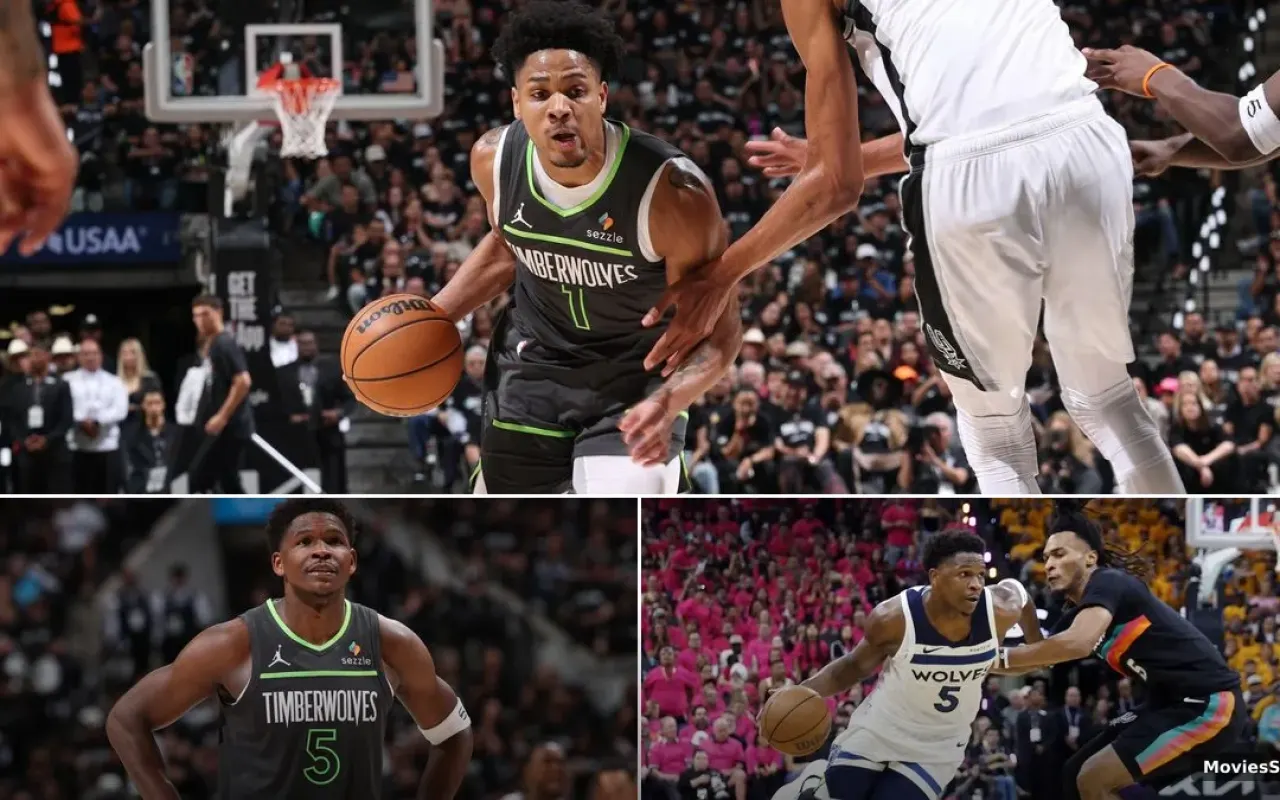
The 2026 NBA Playoffs have reached a fever pitch as the next generation of superstars collides in the Western Conference Semifinals. In a pivotal Friday night showdown at the Target Center, the San Antonio Spurs reclaimed home-court advantage with a hard-fought 115-108 victory over the Minnesota Timberwolves. This Spurs vs Timberwolves Game 3 Analysis explores how a historic individual performance shifted the momentum of the series, leaving Minnesota searching for answers to a 7-foot-4 riddle that seems to have no solution.
Game 3 Recap: Wembanyama's Historic 39-Point Night
The story of Game 3 was, undeniably, the sheer statistical dominance of Victor Wembanyama. After a quiet offensive showing in the series opener and a blowout victory in Game 2 at the Frost Bank Center, the Frenchman arrived in Minneapolis with a point to prove. From the opening tip, Wembanyama asserted himself, scoring the team’s first seven points and spearheading an early 18-3 run that silenced the Minnesota crowd.
What followed was a masterclass in efficiency and rim protection. Wembanyama finished the night with a stat line that looks more like a video game than a box score. To understand the gravity of his performance, one must look at the raw data from this Spurs vs Timberwolves Game 3 Analysis:
Victor Wembanyama Game 3 stats vs Timberwolves
- Points: 39
- Rebounds: 15
- Blocks: 5
- Field Goals: 13-of-18 (72.2%)
- Free Throws: 10-of-12 (83.3%)
Wembanyama’s ability to remain "steady" despite picking up his fifth foul with over six minutes remaining in the fourth quarter proved to be the difference. He sat for only sixty seconds before returning to anchor a defense that held Minnesota to just one field goal in the final three minutes of play.
The Elite Company: Comparing Wemby to Kareem, Shaq, and Hakeem
With his performance on Friday, Wembanyama didn't just win a game; he entered the pantheon of the greatest big men to ever play the game. He became only the fourth player in NBA history to record at least 35 points, 15 rebounds, and 5 blocks in a playoff game. The other three names on that list—Kareem Abdul-Jabbar, Hakeem Olajuwon, and Shaquille O'Neal—represent the gold standard of postseason dominance.
However, Wembanyama’s night carried a unique distinction. He is the only player among that legendary quartet to achieve those numbers while shooting over 70% from the field. While Mark Eaton or Andrew Bynum may have had singular nights of defensive brilliance in decades past, Wembanyama’s combination of volume scoring and efficiency is unprecedented. The 22-year-old specifically credited Olajuwon for teaching him the spin-fadeaway jump shot, a move he used effectively over his countryman and mentor, Rudy Gobert, during a decisive 16-point fourth-quarter flurry.
Spurs vs Timberwolves Game 3 Analysis: The Tactical Chess Match
The coaching matchup between San Antonio’s Mitch Johnson and Minnesota’s Chris Finch has become a central narrative of this series. In Game 3, Johnson’s tactical flexibility was on full display. Recognizing that the Timberwolves were intent on utilizing a double-team every time Wembanyama touched the ball in the low post, Johnson moved the Frenchman to the perimeter to act as a facilitator.
This shift opened up the pick-and-roll game for veteran stabilizer De'Aaron Fox. Fox, acquired to provide a steady hand for this young Spurs core, manipulated the Minnesota defense, forcing Rudy Gobert to choose between dropping to protect the rim or stepping up to contest Fox’s mid-range jumper. When Gobert dropped, Fox found Wembanyama for trailing threes or lobs. When Gobert stepped up, the Spurs exploited the "dunkers spot" for transition points and easy layups.
Furthermore, the Stephon Castle defensive impact stats are beginning to tell the story of San Antonio's perimeter success. Castle, the rookie standout, was tasked with hounding Minnesota's secondary playmakers. When Castle is on the floor and scoring 20+ points, the Spurs have remained undefeated this postseason, a trend that continued in Game 3 as he provided the necessary scoring punch to keep the Wolves' defense honest.
The Anthony Edwards Injury Update: Mobility and Explosiveness
For the Timberwolves, the primary concern remains the health of their superstar. Fans have been scouring every Anthony Edwards injury update since he suffered a hyperextended knee late in the first round. While Edwards finished Game 3 with a respectable 32 points and 14 rebounds, the "eye test" suggests he is far from 100%.
Medical analysis of Edwards' movement suggests he is dealing with a significant bone bruise. High-usage guards rely on lateral quickness and "second-jump" explosiveness to finish over length—two traits that were noticeably dampened in Game 3. Tracking data shows that Edwards' "explosiveness metrics"—specifically his acceleration in the first three steps of a drive—are down 18% compared to the regular season. This lack of burst allowed Wembanyama to recover and contest shots that Edwards would normally finish with ease.
Minnesota’s offensive efficiency has plummeted as a result. When guarded directly by Wembanyama or forced into the paint where he is lurking, the Timberwolves shot a dismal 34% in Game 3. Without the ability of Edwards to consistently collapse the defense, Minnesota's shooters are seeing fewer "clean" looks from the corners.
Timberwolves' Depth Failure and the Fatigue Factor
A significant content gap in the current series coverage is the impact of the 8:30 PM local tip-off on player fatigue. In a high-intensity best-of-seven series, the late starts in the Central Time Zone have clearly favored the younger Spurs roster. Minnesota’s bench, which was a strength during the regular season, appeared sluggish in the second half of Game 3.
The absence of Donte DiVincenzo (Achilles) and the limited availability of Ayo Dosunmu have crippled Chris Finch’s rotation. Without these key backcourt pieces, the burden on Edwards and Mike Conley has become unsustainable. The Wolves' bench was outscored 28-14 in Game 3, a margin that essentially decided the game. If the Timberwolves hope to save their season, they must find a way to exploit Wembanyama's occasional foul trouble—perhaps by moving Edwards back to a more traditional "slasher" role in the starting lineup for Game 4 to force early whistles.
The Officiating Controversy: Goaltending and Rim Protection
While Game 3 was relatively clean, the shadow of Game 1’s officiating continues to loom over the series. Chris Finch was vocal about the goaltending calls—or lack thereof—regarding Wembanyama’s record-breaking 12-block performance earlier in the week. The Timberwolves' coaching staff claimed that at least four of those blocks were illegal, representing an eight-point swing in a two-point loss.
In Game 3, the officiating crew appeared to have a "heightened awareness" of the cylinder. Wembanyama was whistled for one goaltend early in the second quarter, but his paint dominance remained mostly legal. The NBA officiating crew for Game 4 will likely face intense scrutiny, as both teams have now complained about the physicality allowed in the post. Minnesota's Terrence Shannon Jr. has vowed to continue going "downhill" at Wembanyama, setting the stage for a high-stakes collision at the rim in the next contest.
Key Takeaways from Game 3
- Historic Efficiency: Victor Wembanyama’s 72.2% shooting is the highest ever recorded in a 35/15/5 playoff game.
- Road Warriors: The San Antonio Spurs remain unbeaten on the road in the NBA Western Conference Semifinals 2026.
- Injury Woes: Anthony Edwards is clearly hampered by a knee injury, affecting his ability to finish in the paint against Wembanyama’s length.
- Coaching Edge: Mitch Johnson’s use of De'Aaron Fox in the pick-and-roll successfully neutralized Rudy Gobert’s help-side defense.
- Bench Struggles: Minnesota’s lack of backcourt depth due to injuries to DiVincenzo and Dosunmu is becoming a critical failure point.
Spurs vs Wolves Game 4 Prediction: Can Minnesota Even the Series?
As we look toward Sunday’s Mother's Day matchup, the Spurs vs Wolves Game 4 prediction hinges on Minnesota’s ability to generate easy offense. The Target Center home-court advantage will be vital, but the crowd can only do so much if the Wolves cannot improve their offensive efficiency.
Historically, teams that take a 2-1 lead in the second round go on to win the series over 80% of the time. However, the Timberwolves are a veteran-led group that has shown resilience in the past. To even the series, Chris Finch must find a way to get Wembanyama away from the basket, perhaps by utilizing Rudy Gobert as a high-post playmaker to pull the "protege" out of the paint.
If Edwards can find even 10% more of his usual explosiveness, and if the Timberwolves can capitalize on the transition opportunities that the Spurs' aggressive defense occasionally gives up, we could be headed back to San Antonio tied at 2-2. If not, the Wembanyama era of postseason dominance may have arrived even sooner than the league expected.