Twenty years after Miranda Priestly first demanded a steak from Smith & Wollensky, the fashion world is once again at the center of a global firestorm. However, this time the drama isn’t happening on the pages of Runway magazine, but in the courts of public opinion. The Devil Wears Prada 2 racism controversy has erupted just days before its May 1 premiere, threatening to derail one of the most anticipated sequels in cinematic history. What began as a 38-second promotional clip has transformed into a massive international boycott movement, centered on the portrayal of a new character that critics argue is a regressive "model minority" caricature.
Why is The Devil Wears Prada 2 facing a boycott?
The Devil Wears Prada 2 is facing boycott calls primarily due to the portrayal of a new Asian character, Jin Chao (played by Helen J. Shen). Critics argue the character reinforces 'model minority' stereotypes by being depicted as a socially awkward, academic overachiever. Additionally, the name 'Jin Chao' has been criticized for its phonetic similarity to a racial slur and the Chinese phrase 'Zhen Chou,' meaning 'really ugly.'
The Spark: The 38-Second Trailer That Ignited a Global Debate
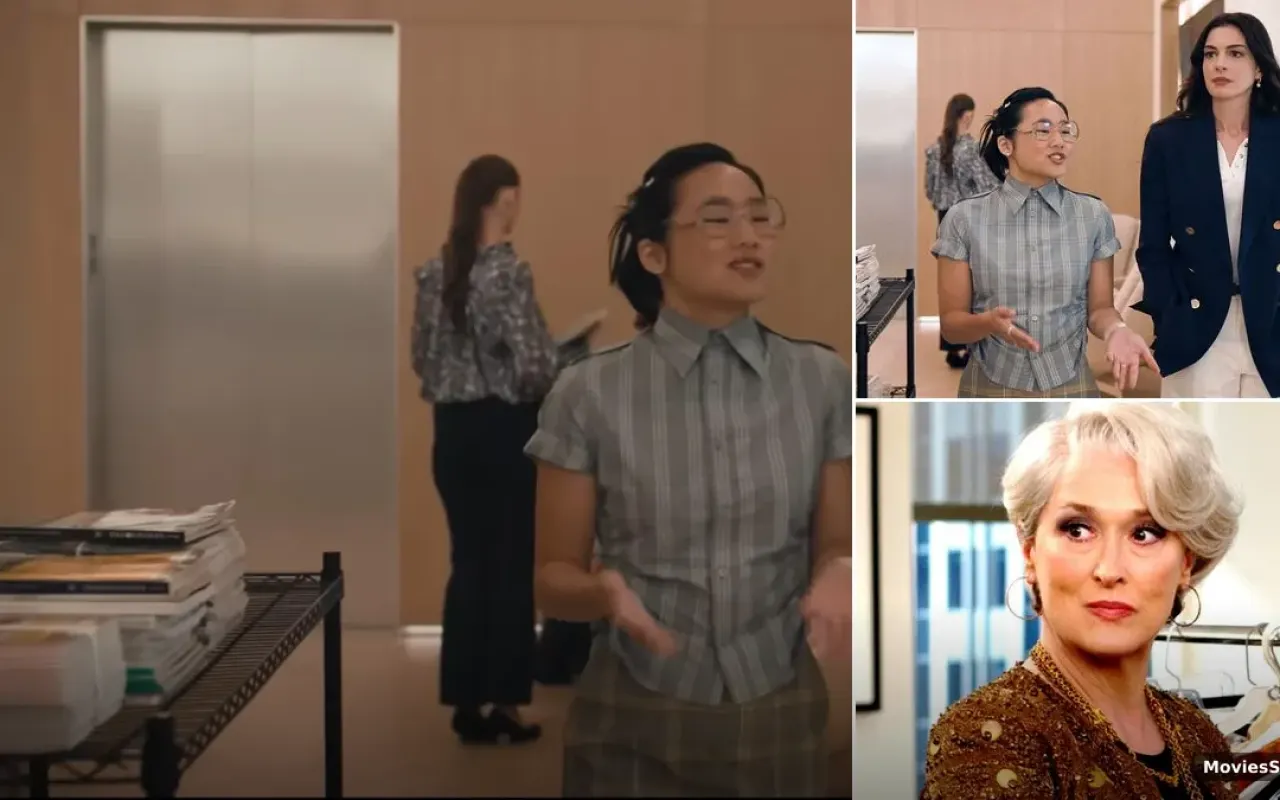
The controversy began when 20th Century Studios released a brief teaser introducing Anne Hathaway’s character, Andy Sachs, to her new assistant, Jin Chao. In the clip, Jin—played by newcomer Helen J. Shen—is seen transitioning from an intern to a full-time staffer. The interaction is brief but dense with what many perceive as "lazy" writing. Jin immediately rattles off a list of high-achieving credentials: a degree from Yale University, a 3.86 GPA, a perfect 36 ACT score on her first attempt, and her role as the lead soprano for the Yale Whiffenpoofs.
The clip quickly went viral, amassing over 26 million views across X (formerly Twitter), TikTok, and Weibo. While the studio likely intended the scene to highlight the competitive nature of a modern-day Runway, the reaction was swift and overwhelmingly negative. Asian audiences across the globe—particularly in China, Japan, and South Korea—decried the character as a "socially awkward caricature" that feels decades out of date in 2026 cinema.
The 'Jin Chao' Name Controversy: Linguistic Oversight or Intentional Slur?
At the heart of the Jin Chao character backlash is the name itself. For many viewers, the name "Jin Chao" (sometimes transcribed as Jen Chao or Qinzhou in different regions) is phonetically indistinguishable from a historical anti-Asian slur. This linguistic oversight has led to accusations of performative diversity in fashion films, where characters of color are added for representation but handled with a lack of cultural sensitivity.
Linguistic experts and netizens have pointed out two primary issues with the name:
- Phonetic Slurs: The name's cadence closely mirrors the "Ching Chong" slur used to mock Chinese accents since the 19th century.
- Mandarin Translations: Chinese social media users on Weibo have noted that "Jin Chao" sounds remarkably similar to "Zhen Chou" (真丑), which translates to "really ugly," or "Zhen Chou" (真臭), meaning "really stinky."
Critics argue this is part of a broader pattern of Hollywood naming conventions for Asian characters being handled carelessly. Comparisons have been drawn to the Harry Potter character Cho Chang, a name often criticized for being a collection of two surnames from different cultures, or the 1980s caricature Long Duk Dong. That such a high-profile production in 2026 could stumble on basic naming nuances has left many questioning the diversity of the film's writers' room.
Breaking Down the 'Model Minority' Trope in 2026
Beyond the name, the The Devil Wears Prada 2 racism controversy focuses on the "nerdy overachiever" archetype. In the original 2006 film, the "Runway" assistants were defined by their fashion sense, their cynicism, and their desperation to succeed in a glamorous world. In contrast, Jin Chao is introduced through her academic stats rather than her editorial eye.
The decision to make the only prominent Asian character a Yale Whiffenpoofs soprano with a 3.86 GPA feels, to many, like a return to the model minority trope. Journalist Tanya Chen noted that depicting a high-achieving Asian woman with low social aptitude is a "big lazy stupid trope" that Hollywood refuses to retire. The contrast is stark: while Andy Sachs (Anne Hathaway) and Emily Charlton (Emily Blunt) were "uncool" in the first film because they didn't know how to spell "Gabbana," Jin Chao is coded as uncool because she is an academic overachiever who lacks social grace.
Stereotype vs. Reality: The Jin Chao Portrayal
| Character Trait | The Film's Portrayal (Stereotype) | Modern Asian-American Reality |
|---|---|---|
| Academic Background | Yale grad, 36 ACT (first try), 3.86 GPA. | Diverse career paths including creative arts, fashion design, and entrepreneurship. |
| Social Aptitude | Socially awkward, overly blunt, "nerdy." | Socially fluid, trend-setting, and influential in global pop culture. |
| Fashion Sense | Plaid shirts, glasses, "frumpy" aesthetic. | Leading the "Streetwear," "C-Style," and "K-Fashion" movements globally. |
The Defense: Is Jin Chao a Stereotype or a Gen Z Caricature?
Not everyone agrees that the character is a product of Asian stereotypes in Hollywood 2026. South Korean-American director Joseph Kahn has been the most vocal defender of the film, suggesting the backlash stems from a cultural misunderstanding. Kahn argues that Jin Chao isn't a caricature of an Asian person, but rather a caricature of Gen Z fashion and "neurodivergency."
According to Kahn, Jin’s outfit—the plaid shirts, hair clips, and glasses—is actually "very couture" within the context of current Gen Z fashion trends like Cottagecore and Dark Academia. He suggests that the character is meant to represent a "fashionable striver" who prioritizes a specific, intellectual aesthetic over the traditional high-fashion glamour of the early 2000s.
However, this defense has largely failed to resonate with the Devil Wears Prada 2 boycott China movement. Critics argue that even if the styling is "on-trend," the combination of the name, the academic boasting, and the social awkwardness creates a "perfect storm" of tropes that specifically target Asian identity. The disconnect between American Gen Z subcultures and global Asian perceptions has created a significant cultural blindspot for 20th Century Studios.
Global Impact: Boycotts in China, Japan, and South Korea
The commercial stakes for the sequel are massive. The film is scheduled to open during the Labor Day Golden Week (May 1–5), one of the most lucrative box-office periods in China. Early reports from the Korean Film Council and Chinese box office trackers suggest that the controversy is already impacting ticket sales. While The Devil Wears Prada (2006) remains a cult classic in Asia, the sequel's reputation has plummeted on social platforms like Weibo and X.
The impact of social media boycotts on global box office performance cannot be understated. In China, the hashtag #BoycottTheDevilWearsPrada2 has trended multiple times, with users accusing the film of "consuming Chinese people as a joke." Industry analysts suggest that a significant portion of the film’s $150M+ budget was predicated on a strong performance in the Asian market—a market that now feels alienated by the film’s Asian American representation.
The Marketing Dissonance: Jang Won Young vs. Helen J. Shen
Adding another layer of complexity to the The Devil Wears Prada 2 trailer controversy is the film's marketing strategy in South Korea. 20th Century Studios heavily utilized K-pop sensation Jang Won Young in a Vogue Korea promotional campaign. In these ads, Jang Won Young is the epitome of high-fashion glamour, aligning perfectly with the original film's DNA.
The contrast between the "High Fashion" marketing featuring Jang Won Young and the "Frumpy Assistant" character played by Helen J. Shen has frustrated fans. Many feel that the studio is using Asian "cool" to sell tickets while simultaneously depicting an Asian character as an "uncool" nerd on screen. This perceived hypocrisy has fueled the fire of the Jin Chao character backlash, with fans calling it a "bait-and-switch" of cultural representation.
Key Takeaways from the Controversy
- The Name: "Jin Chao" is being criticized for its phonetic similarity to anti-Asian slurs and the Mandarin phrase for "really ugly."
- The Trope: The character’s focus on a 3.86 GPA and Yale credentials reinforces the "model minority" stereotype.
- The Defense: Supporters argue the character is a "Gen Z" caricature reflecting Dark Academia and Cottagecore aesthetics, not a racial one.
- Commercial Risk: The boycott coincides with China's Labor Day Golden Week, potentially costing the film millions in international revenue.
- The Cast: While Anne Hathaway, Meryl Streep, and Emily Blunt return, the focus has shifted entirely to the new assistant's portrayal.
Conclusion: A Cultural Reckoning for Hollywood
As the May 1 release date approaches, the question remains: will 20th Century Studios edit the film or issue a formal apology? So far, the studio has remained silent, even as the The Devil Wears Prada 2 racism controversy grows. This silence may be a calculated risk, hoping that the "extra context" of the full film will vindicate the character’s portrayal.
However, in the hyper-connected world of 2026, first impressions are often final. Whether Jin Chao is a misunderstood Gen Z icon or a regressive stereotype, the backlash highlights a growing demand for nuanced, authentic representation that moves beyond academic accolades and phonetic accidents. For a film franchise built on the power of the "perfect look," the creators of The Devil Wears Prada 2 may have fundamentally misread the room.