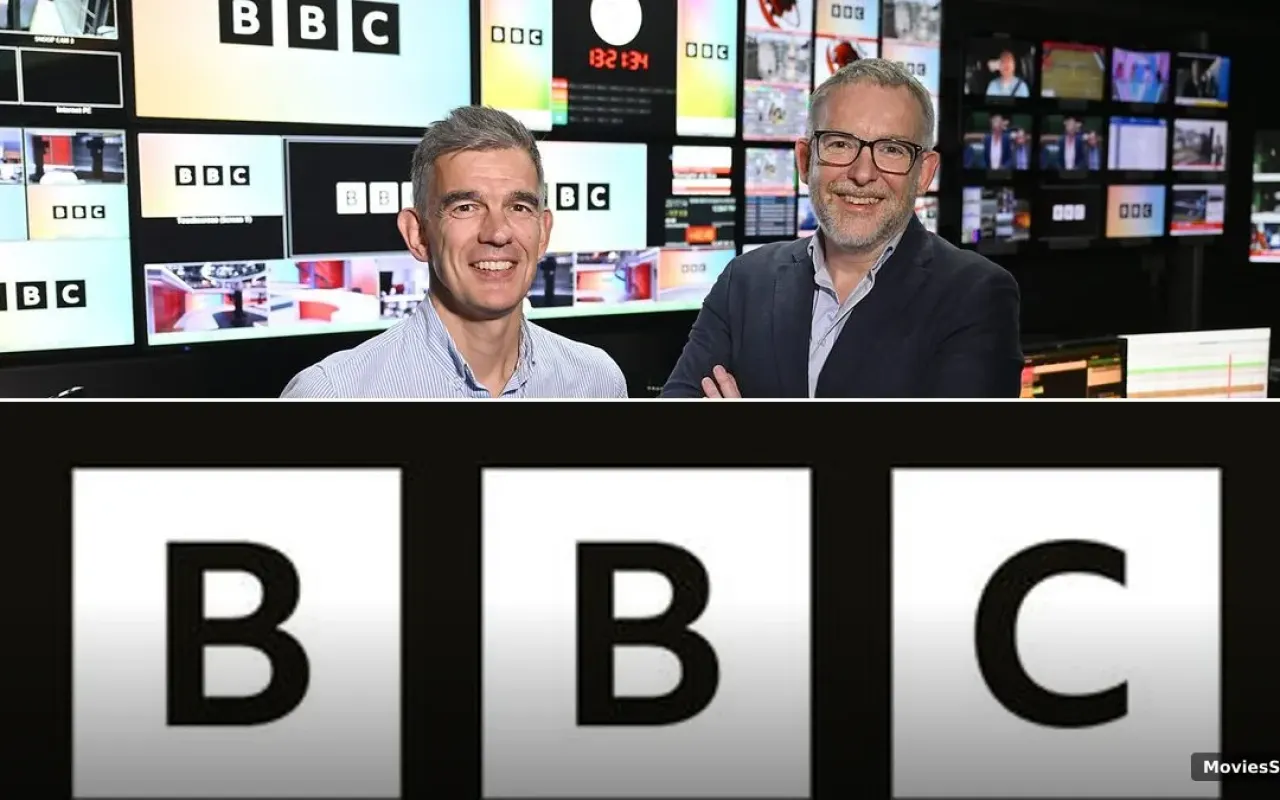
The BBC just filled its most glaring leadership void. After seven years of operating without a formal second-in-command, the corporation has officially named Rhodri Talfan Davies BBC Deputy Director General. This isn't just another corporate promotion; it is a calculated move to stabilize the ship as the BBC heads into its most turbulent era yet. By tapping a 28-year veteran who has lived and breathed the corporation’s public service mission since the late '90s, the BBC is signaling a "safe hands" approach to its future.
Rhodri Talfan Davies is the Deputy Director-General of the BBC, appointed in June 2026. A 28-year veteran of the corporation, he previously served as Director of Nations and interim Director-General. He is responsible for the BBC’s editorial strategy and safeguarding public trust. His appointment follows a period of "caretaker" leadership where he steered the broadcaster through the departure of Tim Davie and the arrival of the new Director General, Matt Brittin.
A Strategic Return: Why the BBC Revived the Deputy DG Role
The revival of the Deputy Director General role marks a significant shift in the BBC leadership changes 2026. Since Anne Bulford stepped down in 2019, the position has remained vacant, leaving a massive gap between the Director General and the rest of the BBC Executive Committee. For seven years, the "Number Two" spot was essentially a ghost role, with responsibilities split across various divisional heads.
So, why bring it back now? The timing isn't accidental. With the 2027 Charter renewal looming—a moment that will decide the future of BBC license fee 2026 and beyond—the corporation needs a leader who understands the internal plumbing of the organization. While the new Director General, Matt Brittin, brings a high-tech, "outsider" perspective from his years at Google, the BBC Board clearly felt the need for an "insider" counterbalance.
Rhodri Talfan Davies serves as that bridge. His mandate is clear: oversee the BBC editorial strategy and ensure that editorial excellence isn't sacrificed at the altar of digital transformation. In a media landscape where editorial standards are under constant fire from both the public and the Department for Culture, Media and Sport (DCMS), having a dedicated Deputy DG to "safeguard public trust" is a defensive necessity.
Who is Rhodri Talfan Davies? A 28-Year BBC Odyssey
To understand why Davies was the "outstanding choice," you have to look at his trajectory. He didn't just land this job; he lived it. Joining the BBC in the mid-90s, Davies has navigated nearly three decades of cultural and technological shifts. He is, quite literally, "steeped in the BBC’s DNA," as Matt Brittin put it.
His most recent permanent role as BBC Director of Nations saw him managing one of the most complex portfolios in the building. Overseeing the Nations and Regions division meant balancing the distinct needs of Wales, Scotland, Northern Ireland, and the English regions. This wasn't just about local news; it was about maintaining the BBC’s relevance in an increasingly decentralized UK. During his tenure, he oversaw substantial budgets and led the "Across the UK" strategy, which aimed to move more power and production out of London—a move often scrutinized by the National Union of Journalists (NUJ) and regional politicians.
The defining moment of his career, however, was his recent stint as interim Director General. After Tim Davie stepped down in April 2026, Davies took the wheel. It wasn't a quiet "caretaker" period. He was the one who had to break the news of 2,000 job cuts to the staff—a brutal introduction to the top job that tested his resilience. His ability to handle that operational crisis while maintaining broadcasting leadership is likely what sealed his appointment as the permanent Deputy DG.
The 'Caretaker' Legacy and the 2,000 Job Cuts
Staff morale at the BBC has been a delicate thing lately. When Davies announced the 2,000 job cuts during his interim period, it wasn't just a number; it was a fundamental restructuring of the workforce. While unions like the NUJ expressed deep concern over the impact on editorial standards, Davies managed the fallout with a level of transparency that earned him respect within the BBC Board. He proved he could do the "hard part" of leadership—the part that involves corporate governance and painful fiscal reality—without losing the room.
Editorial Strategy and Public Trust: The New Mandate
As the Rhodri Talfan Davies BBC Deputy Director General, his primary focus shifts from regional management to the global editorial vision. He is now the ultimate arbiter of the BBC editorial strategy. But what does that actually mean in 2026?
It means ensuring the BBC remains a "beacon of trust" in an era of AI-generated misinformation and hyper-polarized social media. Davies is tasked with driving editorial excellence across radio, television, and online platforms. This includes:
- Rapid Response: Ensuring the corporation responds "rapidly and robustly" to editorial and operational crises. Think of the high-profile impartiality rows of the past; Davies is now the man who has to prevent them—or fix them.
- Impartiality: Deepening the commitment to BBC editorial impartiality guidelines, a constant sticking point with Ofcom and the government.
- Digital Transformation: Working alongside Matt Brittin to ensure the BBC digital transformation strategy doesn't alienate traditional audiences who still value linear broadcasting.
His role is distinct from that of the previous Deputy DG, Anne Bulford. While Bulford was often seen as the "numbers person" (the first woman to hold the role and a powerhouse of operational efficiency), Davies is being framed as an editorial heavyweight. He is there to protect the "soul" of the BBC while Brittin retools the "engine."
The Brittin-Davies Era: Insider Knowledge Meets Tech Expertise
The leadership dynamic between Matt Brittin BBC Director General and Rhodri Talfan Davies is the most interesting part of this story. On one hand, you have Brittin—the former Google executive who knows how to scale digital platforms and monetize attention. On the other, you have Davies—the man who knows exactly how a newsroom in Cardiff or a radio suite in Salford operates.
This "Insider vs. Outsider" model is a classic corporate strategy, but it’s particularly vital for the BBC right now. Brittin’s appointment was met with some skepticism from those who feared he might "Silicon Valley-ify" the British Broadcasting Corporation. By appointing Davies as his second-in-command, the BBC has created a balanced ticket.
Davies vs Brittin: A Leadership Contrast
While Brittin brings a sense of urgency to "reinvent the BBC for the future," Davies brings the institutional memory. This partnership will be tested immediately by the BBC leadership changes 2026 and the ongoing pressure to justify the license fee. We expect Davies to handle the "traditional" stakeholders—the legacy journalists, the BBC World Service, and the regional outposts—while Brittin focuses on the tech stack and global competition with streamers like Netflix and Disney+.
What’s Next for the BBC Nations Division?
With Davies moving up, a massive hole has been left in the Nations division. For now, Rhuanedd Richards will continue to lead Nations as interim Director. Richards is a seasoned executive in her own right, having worked closely with Davies in the Welsh division of the BBC.
The Nations and Regions portfolio is arguably more important than ever. As the UK navigates its own internal political shifts, the BBC’s ability to reflect the lives of people outside of London is its strongest argument for continued public funding. Richards (or whoever takes the role permanently) will need to continue Davies' work of decentralizing production. The "Nations" strategy under Davies wasn't just about regional news; it was about shifting the BBC’s center of gravity. Whether Richards can maintain that momentum while Davies focuses on the global editorial picture remains to be seen.
The Stakes: 2027 and the Battle for the License Fee
Let’s be real: Rhodri Talfan Davies isn't just taking a job; he’s taking a seat at the table for a fight for survival. The future of BBC license fee 2026 is the elephant in every room at Broadcasting House. The current funding model is under intense pressure, and the next Charter renewal in 2027 will be a "make or break" moment.
Davies' role in safeguarding the public’s trust is directly tied to the license fee. If the public stops trusting the BBC's news or stops feeling represented by its content, the argument for a mandatory fee collapses. His first three priorities are likely:
- Strengthening Impartiality: Proving to the DCMS that the BBC can be a neutral arbiter in a divided country.
- Operational Efficiency: Following through on the 2,000 job cuts without letting the quality of output slip.
- Nations Representation: Ensuring that the "Across the UK" strategy isn't just a buzzword but a tangible reality for viewers in Scotland, Wales, and NI.
Key Takeaways: The Rhodri Talfan Davies Appointment
- The 7-Year Itch: Davies is the first Deputy DG since 2019, filling a long-standing vacancy in the BBC Executive Committee.
- The Insider's Insider: With 28 years at the corp, he is the traditionalist balance to Matt Brittin’s tech-heavy background.
- Editorial Focus: Unlike previous deputies, Davies’ mandate is heavily weighted toward editorial excellence and public trust.
- Interim Success: His stint as interim Director General and his handling of the 2,000 job cuts proved his mettle to the BBC Board.
- Nations Legacy: He leaves the Nations division in the hands of Rhuanedd Richards, having successfully pushed for decentralization.
Conclusion: A Return to Tradition to Save the Future
The appointment of Rhodri Talfan Davies BBC Deputy Director General feels like a "back to basics" move for a broadcaster that has spent the last few years trying to find its identity in a digital world. By pairing a Google veteran with a BBC lifer, the corporation is betting that it can innovate without losing its soul.
Davies is a known quantity. He isn't there to disrupt; he’s there to protect. But in the current media climate, "protection" requires a proactive, aggressive defense of editorial standards and a ruthless eye for corporate governance. As we approach the 2027 Charter renewal, the Brittin-Davies duo will be the most scrutinized pair in British media. Whether they can reinvent the BBC while keeping its public service mission intact is the multi-billion pound question. For now, the "safe hands" are in place. Let’s see what they build.